 To satisfy the sharp desire I had
Of tasting those fair apples, I resolved
Not to defer; hunger and thirst at once /
Powerful persuaders, quicken’d at the scent
Of that alluring fruit, urged me so keen.
—John Milton, Paradise Lost
Like most things of value in this world, apples seem simple on the surface: peel, flesh, core, seeds. But look deeper, and their complexities become apparent.
Apples grow throughout the world. They’ve nourished us for eons. Approximately 7,000 named cultivars are currently produced, each with their own subtle differences in flavor and texture. And there used to be more: thousands of varieties have already gone extinct. The prestigious Seed Savers Exchange in Decorah, IA, has identified 20,000 named apples that existed between 1620 and 2000 in the U.S. alone. It’s almost certain that, in the days before genetic testing and databases, uncountable numbers of apple varieties went unnamed and uncultivated in the homesteads and courtyards of the world… And even as we speak, apple breeders are rearing tasty new cultivars to lure you away from your current favorites.
Big Apple World
The world of apples is so extensive and varied in size, shape, color, flavor, and growth requirements because apples have approximately 57,000 genes, twice that of humans and the most known in any plant so far. In addition, they’re so interesting to cultivate because they are “extreme heterozygotes”—their offspring does not resemble its parent. That’s why, when you plant a seed from a McIntosh apple, for instance, you won’t get a McIntosh apple tree because McIntosh apples don’t reproduce true to type, meaning the tree grown from a McIntosh seed will produce different (and likely less tasty) fruit than its parent. In other words, when you’re developing apple cultivars, you have a very slim probability of finding the next great apple, but a great chance of growing not-very-good apples.
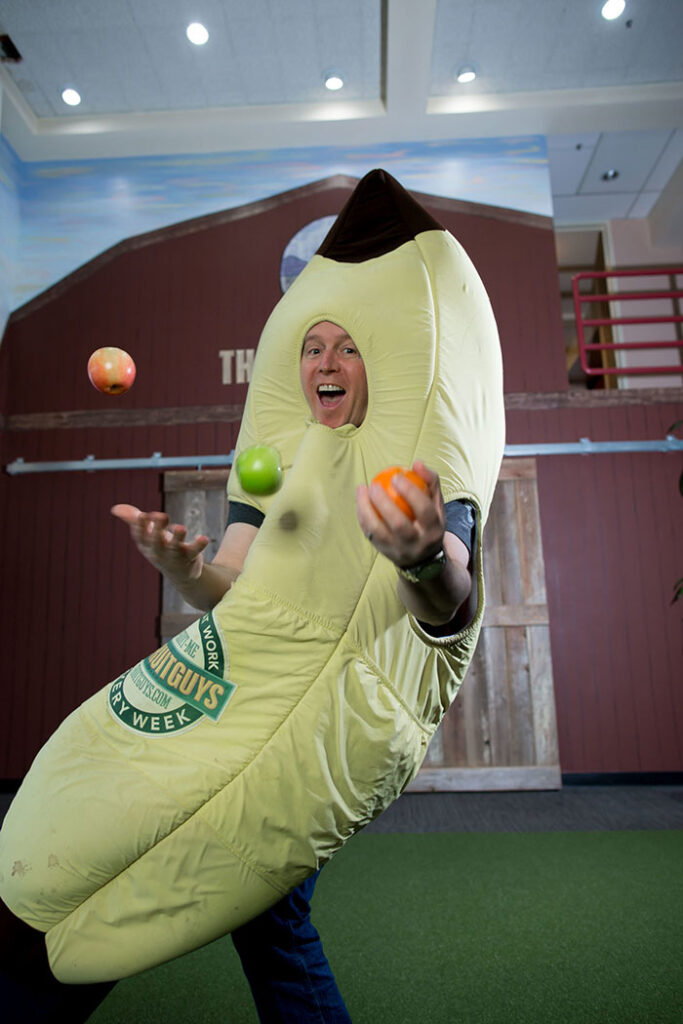
With more than 7,000 successful cultivars, it’s easy to find a great apple. Some people play the field, choosing apple varieties to suit their moods. Others are utterly devoted to their favorite—like the apple-eaters all across the country who joined The FruitGuys in an annual late-summer celebration of Sonoma County’s Gravenstein apple by ordering boxes of the heirloom baking apple.
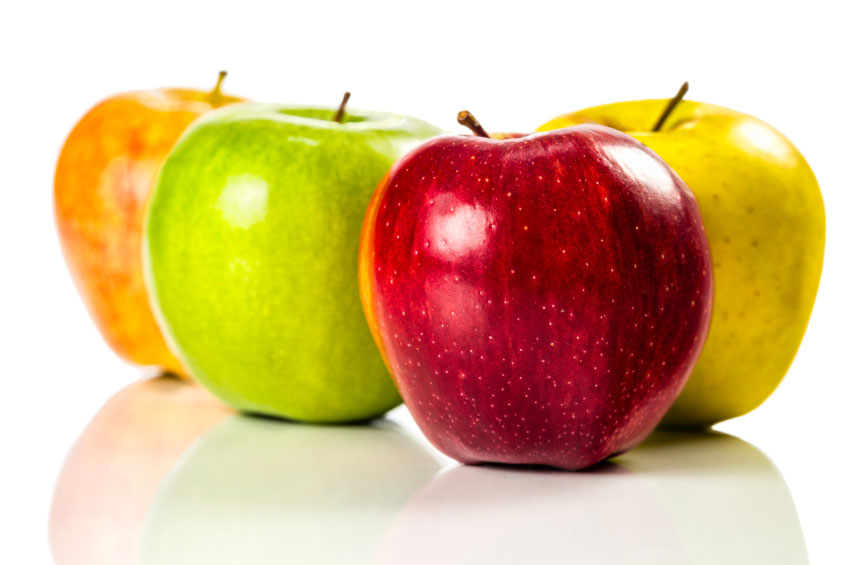
Allegiances to specialty apple varieties and regional growers run deep. Anecdotal market data from small growers and purveyors indicates that the national appetite for apples is veering away from the Red Delicious/Golden Delicious/Granny Smith triumvirate stocked in most grocery store chains. More and more people are enjoying heirloom and new varieties.
By offering a broad spectrum of apples in their boxes, The FruitGuys is part of this new wave of apple enthusiasm. “We’ve worked with many farmers over the years and evolved with them as they develop and experiment with new varieties. We’ve also been researching new farms and varieties that are delicious and ship well,” says Rebecca North, National Buying and Quality Assurance Manager for The FruitGuys.
 What’s in a Name?
One of the most fun aspects of apple love and apple lore is apple names. Apples like Ambrosia or Sweetie say what they taste like in their name. Other apple varieties indicate where they were born, like Sierra Beauty, Rome (as in Rome, Ohio), or Mutsu (a province in Japan).
Apple sleuths can read clues to parentage in names like Opal (born of the Topaz apple) or Jonagold (parents Golden Delicious and Jonathan). Sometimes it comes right down to a grower’s ego—John McIntosh named his prize-winning apple after himself.
A name can also indicate looks: Pink Pearl has a rose-colored surprise inside, and Arkansas Black has very deep, dark red skin. Pippin is Old English for “seedling,” so varieties with “Pippin” in their name are usually grown from a seedling. And then there’s just plain marketability: the tagline for Envy apples is “When you’re this good they call you Envy.”
You Be the Judge
So many apples, so little time. How to find the good ones? Out in the field, apple buyers use special tools to assess apples. “We use refractometers to test sugar levels and penetrometers to test pressure (firmness). These tools have helped us quantify what is usually subjective, like taste and the overall eating experience. However, we do keep our knives handy at all times so we can cut a slice to taste—there’s nothing like biting into a crisp, delicious apple!” North says.
Ultimately, when you’re judging apples, it can all come down to the simplest matrix: sweet vs. tart and firm vs. soft. But within those two measures, there is infinite variation. Eating an apple out of hand is the best way to find out if it’s your soul mate.
When cooking with apples, it’s helpful to pick a variety that will either break down or hold its shape according to your desired outcome. On Martha Stewart’s YouTube channel, chef Thomas Joseph has a more in-depth discussion of how to choose apples for cooking.
Our sense memory is ephemeral. If you come across an outstanding apple, take note. Unless you’re like Proust, writing about his memory-laden madeleines, an easy way to keep track of your favorites over the season is by keeping their stickers. Some fruit fans sticker up their desktops; others keep a fruit journal. Whatever your method of cataloging favorite flavors from the apple gallery, know that it’s a big apple world out there, and life’s too short to eat flavorless apples.
Heidi Lewis writes about farms, bees, and fruit from her home in Sonoma County, CA. She’s been with The FruitGuys since they were FruitKids.