
Bite into a slice of Ataulfo mango and you’ll instantly relate to these centuries-old lines of poetry by Amir Khusrow.
He visits my town once a year.
He fills my mouth with kisses and nectar.
I spend all my money on him.
Who, girl, your man?
No, a mango.
This slim, golden fruit has a tropical taste so sweet it just might transport you to paradise. Here’s the inside scoop on its history and flavor, plus tips for storing and eating it like a pro.
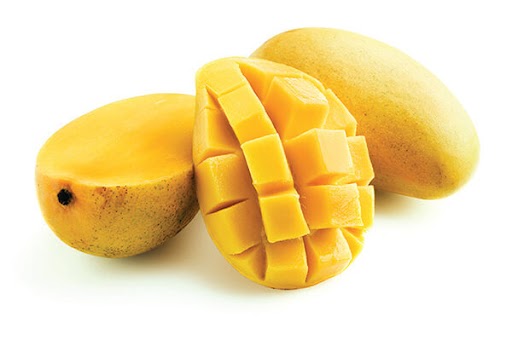
Shaped like big golden beans, these sweet yellow mangos are sometimes also referred to as Honey mangos. They have smooth skin and irresistibly sweet, creamy flesh that makes them a favorite among mango enthusiasts. We love their buttery, melt-in-the-mouth texture and lack of chewy fiber. Thanks to their thin, narrow pits, they have more of the good stuff per fruit than other varieties.
Mango trees (Mangifera indica) are a distant relative of pistachio and cashew trees. And like cashew shells, mango skin contains an irritant compound that can cause an itchy rash—so take care not to eat it.
The Ataulfo mango is native to Mexico, and it’s named after its first cultivator, Ataulfo Morales Gordillo. Exactly how mangoes made their way to Mexico is up for debate, but they may have arrived in the 1500s or 1600s by way of European explorers. Over time, local growers developed various varieties, and Gordillo successfully bred the Ataulfo variety in the Mexican state of Chiapas. Years later, the Mexican Institute of Industrial Property officially recognized the area for its distinct fruit.
Ataulfo Mangoes are celebrated for their sweet and rich flavor. Each bite sings with sweet honey and hints of peach. Their overall flavor profile is mild but distinctly tropical, perfect for eating out of hand, blending into smoothies, or slicing over salads.
Nutritious mangoes are an excellent addition to a health-conscious diet. Here are the benefits you can expect from a typical fruit.
Mangoes are water-rich and will help keep you hydrated. Plus, at just 200 calories per fruit, they’re perfect for a healthy snack.
With more than 5 grams of fiber per fruit, mangoes support digestive health and can help regulate your blood sugar and cholesterol levels.
Ataulfo Mangoes are rich in natural sugars and carbohydrates, with about 46 grams of sugar and 50 grams of carbs in every fruit. That makes them a quick source of energy.
Mangoes are an excellent source of Vitamin C (which helps give you a healthy immune system and glowing skin) with about 122 mg per fruit. They also contain a significant amount of potassium—about 564 mg per fruit—which is great for heart health and balancing your electrolytes. Last but not least, they deliver a bunch of other minerals, including calcium, magnesium, and small amounts of iron.
Mangoes are full of important antioxidant compounds like beta-carotene, which can help boost your eye health and immune system.
Mangoes have just 1.28 grams of fat per fruit, making them a heart-healthy choice.
Last but not least, mangoes offer up a dose of folate (which keeps your cells healthy and is especially important for pregnant women) and other vitamins like thiamin, riboflavin, niacin, and Vitamin B-6.
The sweet, creamy texture of Ataulfo mangoes makes them ideal for a variety of dishes. Check out this blog to learn how to slice or cube them. Then, eat them straight as a snack, sprinkle them on oatmeal or yogurt, or turn them into refreshing Mango-Orange Fruit Popsicles. Ataulfos can also add a tropical twist to salads, and they shine in desserts like sorbets and cheesecakes. Try whipping up a mango salsa for dipping chips or blending them into a mango smoothie.
It’s best to store unripe mangoes at room temperature, ideally in a dark place. Check your mangoes every two days to see if they’re ripe (ripe mangoes will give slightly to the touch). They may take up to eight days to fully ripen.
Once your mangoes are ripe, move them to the refrigerator to keep them fresh and ready to eat. In the fridge, ripe mangoes can last for about six days.
1. Can you eat the skin of an Ataulfo mango?
No, it’s best to peel Ataulfo mangoes because their skin contains irritant compounds like the ones in cashew shells.
2. Are Ataulfo mangoes seedless?
Nope! Each fruit has a thin, narrow pit. Remove it before eating the fruit or using it in recipes.
3. How should you store cut Ataulfo mangoes?
Store cut mangoes in an airtight container in the refrigerator and eat them within a few days for the best quality and flavor.