
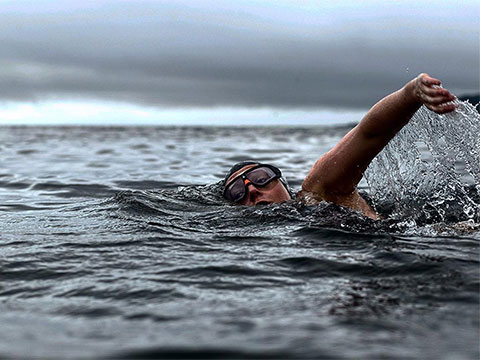
 Shivering on the beach in the lashing wind and rain, I cringe as the 52°F water of San Francisco Bay kisses my toes. Why do I do this? I ask myself, and on winter days like this. Why don’t I wear a wetsuit? Why don’t I take up pool swimming? Why don’t I wait until the water is warmer?
I already know the answer: I will feel amazing afterward.
I focus on that, wading in slowly, clad in just my swimsuit, neoprene cap, earplugs, and goggles. The first two minutes are painful, as the cold needles into every inch of uncovered skin, and the water robs my body of heat, driving the blood from my limbs to my core. I keep swimming, counting my strokes, listening to my breath, my beating heart, and the water. Then a gentle numbness sets in, and it feels good. The cold comes in waves every few minutes. The water and the sky above, embrace me, and I’m enveloped by the wildness of what I’m doing, just yards from San Francisco’s waterfront. Twenty minutes later, I emerge and cross the beach, smiling, cold radiating from my skin, and head for the shower and sauna at my swim club—The Dolphin Club where people have been swimming in the bay’s cold waters since 1877.
Open-water or “wild” swimming—swimming in lakes, rivers, ponds, and oceans—continues to increase in popularity, fueled by expanded participation in triathlons over past decades and a growing presence on social media. The number of people swimming in cold water—loosely defined as water below 70°F—and “winter” or “ice” swimming—defined as water below 41°F—has grown as well, as bloggers such as Tonic of the Sea and others inspire with their tales of recovery from depression and anxiety through their practice of communing with nature in cold water. Whole communities of like-minded adventurers—some would say lunatics—have sprung up on Facebook, such as the Bluetits Open Water Swimmers, a group of women swimmers who first started in Pembrokeshire, UK, in 2014, and meet up for dips year-round in various local spots. The group welcomes newcomers and describes themselves as informal and fun with an emphasis on experiencing the thrill of skin swimming.
Regular cold water swimmers all claim improved mood, energy, circulation, and fewer colds and inflammatory symptoms. I myself have experienced all of these benefits and more. While few studies have been done on the exact physical health benefits, several promising ones have found that open-water swimming improves general well-being and mental health—notably one from the British Medical Journal on its potential to treat major depressive disorder.
Cold-water swimming is an extreme sport that requires training and caution. Along with its many potential benefits, there are also real risks, including death, that all swimmers (as well as rowers, kayakers, and boaters) should be aware of. Cold shock is the body’s response to sudden immersion in cold water and causes uncontrollable gasping and hyperventilation, which can lead to sudden drowning. There is also the potential for increased heart rate and blood pressure, which can lead to a heart attack or stroke. The severity of response will depend on your acclimation to cold water, body fat, and general health. According to the National Center for Cold Water, controlling your breathing becomes increasingly difficult in water below 70°F, and the potential for cold shock is an extreme life-threatening danger in water below 60°F.
The adrenaline rush stemming from the body’s fight-or-flight response to cold water can also cause acute anxiety and even panic attacks that can increase your risk of drowning. If you’re new to this activity, it’s important to start slowly and gradually increase your tolerance as I did and wrote about in facing fear and getting to a one-mile open-water swim.
You should be especially careful if you have cardiac or respiratory issues (such as asthma) or high blood pressure. Discuss the risks with your doctor before you attempt your first swim. That said, many people who try it become quickly hooked.
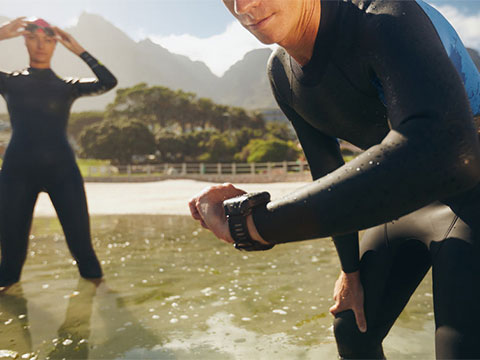 Gear. Get a watch with a timer to monitor your time in the water. Wear what will keep you most comfortable: Consider a wetsuit, booties or gloves, or at least a neoprene swim cap to keep you warmer; earplugs, if you submerge your head, will protect your ear canal from the cold; goggles will keep your eyes safe. A tow float will improve your visibility, give you a dry place to store items, and provide flotation if needed. Bring a towel and layers of warm, dry clothes and shoes to change into afterward. Bring hot tea or soup and a snack.
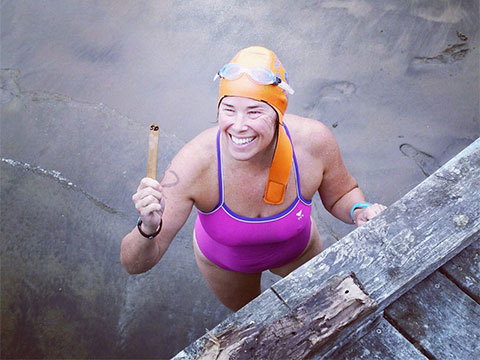 Getting out. Monitor your time, and get out before you think you need to—your body will continue to get cold for a period of time after you are out of the water. If at any point during your swim you start to feel warm and happy, you should get out immediately, as you are likely hyperthermic. Your hands and feet may be quite numb, so be careful walking out. Watch for signs of early hypothermia (slurred speech, shivering, etc). Get into dry, warm clothes as soon as possible. Drink a warm beverage and eat something. Be aware of the danger of the “after-drop,” when the cooled blood from your limbs enters your core and further lowers your body temperature. This can cause you to shiver violently or faint. Avoid a hot-hot shower and warm up slowly. Don’t drive or bike until you are sure you are thoroughly warmed up. Enjoy the serene glow that the swim gave you. You have earned your bragging rights!
In spite of all the risks, done wisely, cold water swimming can be a deeply satisfying way to merge nature with exercise. Be safe and enjoy.
Disclaimer: Coldwater swimming is an extreme sport that can be life-threatening. Confer with your doctor before trying, and attempt at your own risk.
Pia Hinckle is publisher at The FruitGuys and has been swimming in San Francisco Bay for more than 20 years.