
is a 44-acre women-owned and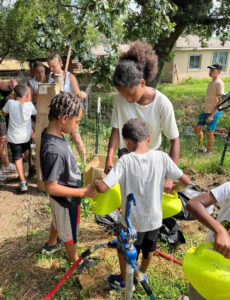 operated farm in Huntsburg, Ohio, that implements permaculture practices such as no-till and stormwater management for reducing water use. The farm engages the local community by offering educational programs in permaculture and the arts. Blue Pear Farm and Gardens crops include a variety of fruits and berries, vegetables, herbs, cut flowers, and value-added goods like jams, butters, soap, candles and teas that are sold through a seasonal farm stand and local businesses. Co-owners, Carol Palansky and Kate Ritchie are also members of The Ohio Ecological Food and Farm Association and The Ohio Farm Bureau.
They will use their $5,000 grant to create and install a pollinator hedgerow along the back parcel of the farm. The funds will be used to purchase 51 native trees, 200 native shrubs, 100 native perennials, and five pounds of wildflower seed mix from their local native plant nursery. The hedgerow project will help the farm expand their efforts to support pollinators and increase crop yields. A volunteer team will carry out site preparation and planting, and will also serve as an educational demonstration for the community.
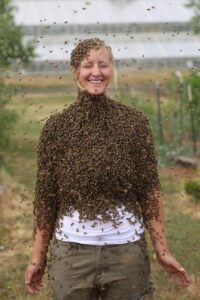 is a women-owned and operated apiary located on thirty acres in Mitchell, Oregon. Beekeeper, Brittany Dye, has close to 400 colonies of honeybees and utilizes holistic beekeeping practices to sync the bees with mother nature as much as possible in order to produce nutritious, clean and natural bee products. The farm’s primary crops are honey, beeswax products, as well as providing pollination services for other farms.
They will use their $4,800 grant to implement a varroa mite-resistant bee breeding program. One of the greatest issues beekeepers face is the varroa mite, a parasite that attacks and feeds on honey bees. The mites often force beekeepers to put harsh chemicals into the hives to save the bees. These treatments are expensive, sometimes ineffective, and mites have begun showing resistance to the chemicals used. The grant funds will be used to purchase 160 varroa mite-resistant queen bees and other materials to produce more mite-resistant bees. Ultimately, this will improve the genetics of Brittany’s hives and she will make them available to other beekeepers in the region leading to healthier bees that can produce more honey, pollinate more plants, and be more economically fit.
is a nonprofit farming and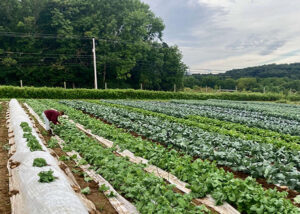 gardening organization based in Clifton, New Jersey. City Green operates on 12 acres preserved by the Land Conservancy of New Jersey for organic food cultivation. The agricultural project practices regenerative and sustainable techniques to maximize food production and sustain soil health while increasing access for low-income families in urban areas of New Jersey. They grow a diverse variety of healthy nutrient-dense vegetables that are popular and culturally relevant to the customers they serve. City Green serves over 6,000 people each year and donates over 8,500 pounds of food to local food pantries in Passaic and Morris counties.
They will use their $2,400 grant to plant four pollinator hedgerows and install drip irrigation to increase water conservation efforts. The hedgerows will have 12 new varieties of native shrubs and 20 new varieties of native perennials that will help restore habitat, provide physical barriers for mitigating the spread of pests, improve yields of nearby crops from increased pollination, and increase resiliency during inclement weather, as the plants will absorb excess water and act as a windbreak that can help keep the soil from drying out. The drip irrigation system will help keep the soil moist around the root zone while conserving water.
is a family-owned and operated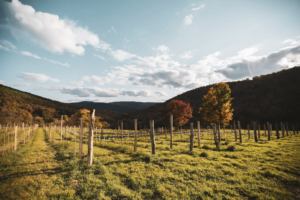 44-acre vineyard and winery run by Deanna Urciuoli & Alfie Alcántara located in Walton, New York near the Catskill Mountains. “In the mid-1800s, America had a blossoming wine industry. Native and hybrid grapes were praised by winegrowers for their extraordinary flavors and natural resilience. But then Prohibition swept through, and these valuable varieties fell by the wayside,” said Deanna. Dear Native Grapes is committed to restoring America’s native and hybrid grapes using winegrowing methods modeled after regenerative practices. The grapes are harvested, crushed, fermented, aged, and bottled on site.
They will use their $5,000 grant to sustainably manage pest pressure by installing a permanent 7-foot deer fence to protect five acres of vineyard. One of their biggest challenges is deer activity that damages and kills their grapes and vines. They believe the fence will not only preserve these varieties of heirloom grapes, but also protect their business and labor investment.
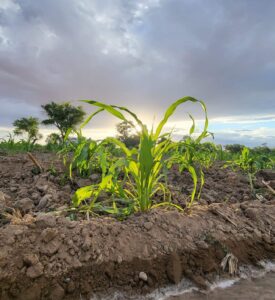 is a five-acre organic, women-owned and operated farm located in the Navajo Nation and run by Jeneva Ben and Najhozhoni Rain Ben. The farm grows Navajo white corn and Navajo white corn pollen, which is used for ceremony-based offerings. The corn is grown, shelled, and packaged on the farm.Their mission is to create economic opportunity with Navajo Nation farms and ranches and give everyone access to affordable traditional organic foods.
With their $5,000 grant they will purchase the necessary supplies to convert an existing outbuilding into a solar-powered drying shed for their heirloom Native corn. Their goal is to create an energy-efficient contained building where they can process the corn, achieve zero spoilage due to humidity, and have a consistent time for drying. Ten neighboring farmers will also be able to utilize the new corn-drying infrastructure and learn about incorporating energy-efficient options like solar on rural farm operations.
is a majority 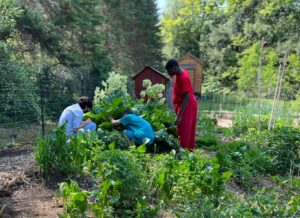 BIPOC-led agricultural non-profit organization located on 73 acres of unceded Mohican land in the northern Berkshires of western Massachusetts. They grow a number of heirloom and culturally-relevant ancestral crops using Afro-Indigenous ecological practices. Since 2007 the farming collective has created a rural place of refuge, knowledge sharing, and intimacy-with-land that centers on BIPOC, immigrant, queer, trans, poor, and disabled communities. They offer space for gatherings, change-making and justice organizing, healing, farming, and nature connection.
With their $4,997 grant they will create a water catchment, storage, and efficient watering system and improve soil health by adding compost, wood chips, and mycelium as amendments as well as using seed for cover crops. The new system will prepare them for variations in rainfall and unpredictable drought while using less ground water resources. “This project will give us the access to the materials needed to continue nurturing the land we tend, and simultaneously can be an integral part of our educational programming where we share knowledge about Indigenous ecological land tending,” said Collaborative Director Fran Sequeira Calderón.
Fox Haven Organic Farm & Learning Center
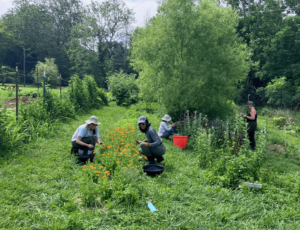 is a majority women and BIPOC-led non-profit farm, ecological retreat, learning center, and wildlife sanctuary situated on 230 acres in the Catoctin Valley of Western Maryland on Piscataway land. The farm’s primary crops are medicinal and culinary herbs that are distributed through its Community Supported Agriculture (CSA) program.
With $4,286 in grant money, the farm will purchase the materials to assemble an ergonomic post-harvest wash table, install drip irrigation to water crops efficiently, and buy a variety of flower and cover crop seed to attract pollinators and build soil health.
Growing Communities Inc. / Crop Swap LA
is a majority BIPOC-and-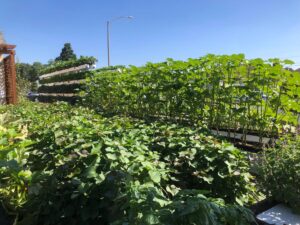 women-led agricultural non-profit organization that operates micro farms in the urban neighborhoods of Leimert Park and Crenshaw in Southern Los Angeles, California. Crop Swap LA is implementing innovative projects, transforming underutilized spaces for efficient food production using rainwater harvesting and sustainable farming practices to bring food access, environmental, and economic benefits to local residents. The micro farms produce a variety of fruits and vegetables that are distributed locally through a membership-based CSA model that is available to residents living within 1 mile of a farm site.
With a $5,000 grant they will develop a new micro farm site with the purchase of garden bed materials, seedlings, soil, and a rainwater catchment and drip irrigation system. The installation of this single micro farm site will allow Crop Swap LA to grow an additional 5,000 pounds of food every year, opening the door to an additional five weekly CSA delivery members, while simultaneously increasing the amount of food distributed across the 75 families currently on the organization’s member list.
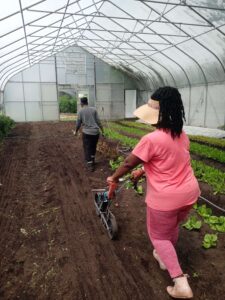 is a USDA-Certified Organic urban farm, workforce development center, and BIPOC-led non-profit social enterprise located in the Englewood neighborhood of Chicago. It grows about 150 varieties of vegetables, which they sell at affordable prices at a weekly farm stand and other local markets during the growing season. They also provide cooking demonstrations, farm tours, and educational community outreach.
With a $5,000 grant, they will purchase pest-resistant mesh netting to install on three existing hoophouses. This integrated pest management-focused project will address the struggles Growing Home is experiencing with pest pressure on a number of its crops. The addition of mesh netting will reduce the time it takes to protect crops from pests and increase yields without the use of chemicals.
is an 28-acre non-profit,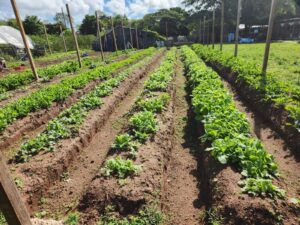 BIPOC-led farm located in Vieques, Puerto Rico. Vieques is an island accessed by ferry from the Puerto Rican mainland, where a majority of the food must be imported. La Finca de Hamberto is working to rebuild a community of farmers and ranchers to establish a sustainable and resilient island community. Their community farm project currently supplies more than ten restaurants and markets with weekly deliveries of fresh produce, hosts internship programs and educational workshops on sustainable farming and animal management techniques, and supports beginning farmers and ranchers with tools, seeds, plants, livestock, and more.
With a $5,000 grant, they will purchase and install a caterpillar-style grow tunnel that is compatible with its solar-powered drip irrigation system in an effort to increase its capacity to cultivate high-demand crops throughout the season. The goal is to produce a reliable 50-100 pounds of produce each week with the capacity to sell to 20 different restaurants and markets, as well as continue weekly donations to their community kitchen. The caterpillar tunnel will also double as a community gathering space where student workshops will be held on irrigation, soil health, and crop production.
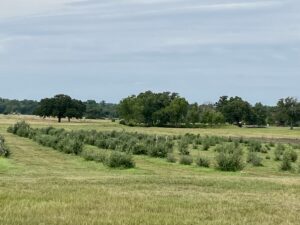 is an 80-acre, women-owned and operated farm and olive orchard located in Madisonville, Texas. It produces olives, grapes, flowers, honey, and herbs using sustainable growing practices, plus value-added products such as olive oil, stuffed olives, herb mix, sauces, and jams. In 2021, Winter Storm Uri caused damage to 14,000 of its olive trees. Only ten rows of its original rootstock survived. Lone Star Olive Ranch has been hard at work planting new olive saplings and diversifying its farm with the addition of new crops.
With a $4,751 grant, they will expand its sustainable farming practices by planting heirloom varieties of fruit trees and plants, and add two beehives near its orchard and growing space. The funds will also cover essential beekeeping equipment as well as wildflower seeds and a seed spreader tool.
Mountain Echoes Farm / Soil Hued Mojo
is a 20-acre, women-of-color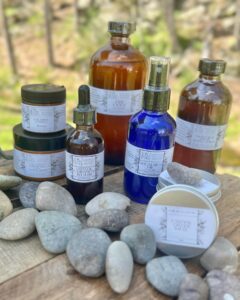 and family-owned farm in Mathias, West Virginia, that grows medicinal maternal health herbs and creates small-batch products that support BIPOC and other vulnerable individuals in Appalachia and neighboring regions. They partner with local birth clinics and midwifery practices to support maternal health with their products including sitz baths and perineal sprays, teas to encourage milk production and support the nervous system, magnesium oil, balms for diaper rash and nipple chafe, massage oils, and salves. Mountain Echoes Farms uses Afro-Indigenous farming, such as crop rotation, intercropping, succession planting, the exclusion of chemicals, supporting pollinators, seed saving, and no-till methods.
With a $3,097 grant they will purchase a hoop house, build a solar dehydrator, and add two beehives. The 200-square-foot hoop house will allow for the cultivation of additional herbs and extend the growing season. A solar dehydrator will reduce electricity use and crop waste while improving productivity for the processing and preservation of bulk herbs. Establishing the additional bee colonies will increase pollination and help boost yields.
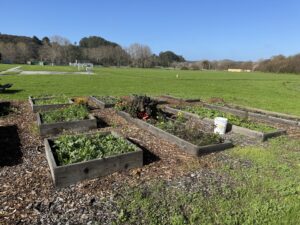 is a 27-acre agricultural non-profit located in Pescadero, California. Pie Ranch is a Certified Organic, regenerative farm and food system education center that engages and employs young people on the land; shares resources with emerging, primarily BIPOC farmers; and helps make healthy food accessible to San Francisco Bay Area communities. Their Food Lab program is an educational initiative with Pescadero Middle/High School that offers farm experience and training to young people.
With a $2,135 grant, they will create compost bins, install a drip irrigation system, and buy seeds and plantings for a pollinator hedgerow at the Pescadero Middle/High School School garden site.
Refugee and Immigrant Self-Empowerment (RISE) Community Farm
is a 180-acre agricultural non-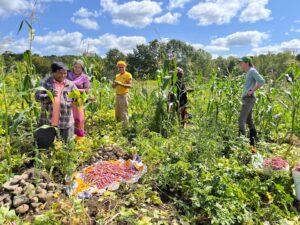 profit, community-based farm located in Syracuse, New York. The farm serves as a resource for immigrants and refugees who are interested in farming. The program offers free or low-cost access to land, agricultural and business education, and other resources to help growers and entrepreneurs produce their own food. The program is facilitated by Refugee & Immigrant Self-Empowerment (RISE). RISE provides market access for farmers who wish to participate, including staffing a table at the popular Syracuse Regional Market and coordinating wholesale transactions through local CSA and hunger relief programs.
With a $4,825 grant, RISE farm will install deer fencing to prevent crop loss. One issue facing the farm has been significant and increasing predation from deer that is affecting yields. While RISE’s farmers managed to produce over 10,000 pounds of culturally-significant vegetables in 2023, staff estimate that 25-30% of the potential harvest was eaten or destroyed by deer.
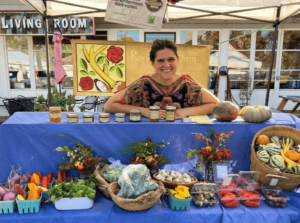 is a 15-acre, family-owned and operated farm run by Holly Evans and Randy Buck. Located in Leasburg, Missouri, it grows a wide variety of vegetables and some fruit, focusing on unusual items like purple pole beans, ground cherries, radish pods, French sorrel, and green garlic. It employs a number of sustainable farming practices including no-till, rebuilding soil-heath, and increasing biodiversity on the farm. It sells its produce at farmer’s markets in the St. Louis area and through a small CSA. They also participate in the federal Women, Infants & Children supplemental nutrition program and senior farmers market coupon program, allowing low-income neighbors to purchase fresh produce.
With a $855 grant, they will purchase eight heirloom fruit trees from a local nursery along with tree guards and organic fruit tree fertilizer to expand its heirloom varieties of fruit trees in order to offer rare and unusual fruits, such as medlar, quince, rare apricots and plums to their customers.
Servicing Every Soul / S&S Friendly Ranch
is a 10-acre, Black owned-and-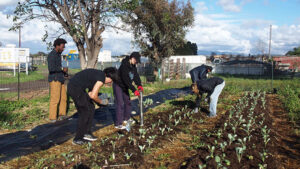 operated ranch and agricultural non-profit educational program located in the Tijuana River Valley, a rural community in the southern section of San Diego, California. It is dedicated to empowering youth with the skills to cultivate food and develop a connection with the land. It specializes in cultivating a variety of crops including corn, beans, squash, kale, spinach, broccoli, chard, cilantro, chives, watermelon, sweet potato, beets, and radishes through regenerative agricultural growing practices. The food it grows has been primarily delivered to local families through their Nutrient-Dense Food Security Program.
With a $4,999 grant, they will build a self-service, solar-powered refrigerated farm stand in order to provide consistent access to fresh, affordable food for customers. The farm stand will also integrate rainwater catchment from the stand’s roof to irrigate a native plant garden that will be planted around the farm stand.
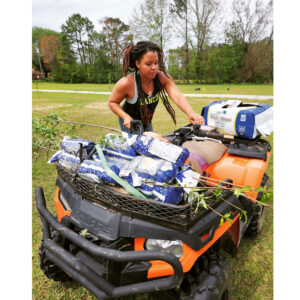 is a 7-acre Black-owned family farm in Hattiesburg, Mississippi. It specializes in the cultivation and sale of heirloom Afro-Indigenous and Caribbean-inspired food and culturally-relevant commodities, crafts, and medicinal products. Its current crops include okra, creole tomatoes, Cuban oregano, bullnose pepper, Mississippi watermelon, pimento pepper, Jamaican sorrel, fever grass, Joumou pumpkin, Jamaican bhaji, paw paw, American persimmon, chickasaw plum, and muscadine. Its crops and products are sold directly from the farm, and starting this summer, at a mobile market.
With a $5,000 grant, TruCulture will establish a living fruit orchard by purchasing native fruit trees along with companion plants, soil, and drip irrigation materials. The fruit trees will be planted using a unique permaculture “basket weave” technique that creates an above-ground bed. This technique enables the trees to establish themselves in an environment conducive to its root system, and once established, reach outward into surrounding soils. The drip irrigation system will optimally hydrate the trees while conserving water.
is a 13-acre women and family-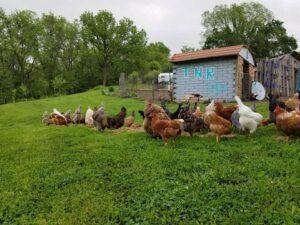 owned and operated farm located in Kansas City, Kansas. It produces a wide variety of fruits and vegetables in addition to keeping chickens and ducks for eggs and goats for cheese while practicing sustainable and ecological practices. TNR sells its products at three local farmers markets, as well as directly off the farm.
With a $3,524 grant, they will purchase a solar powered portable fencing system as well as pasture and pollinator seed. The fence system will allow TNR to utilize rotational grazing techniques for its dairy goats and other pasture-raised animals. In doing so, it will contribute to better soil health. The addition of pasture and pollinator seeds will give its animals and surrounding wildlife access to high-quality foraging, as well as attract pollinators.
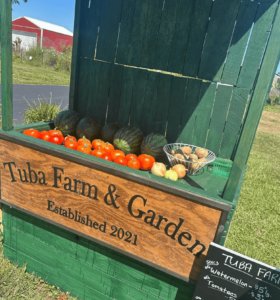 is a 1-acre, women and BIPOC-led agricultural non-profit farm created to promote food sovereignty, reduce food insecurity and waste. It is located in Glassboro, New Jersey, and serves the communities of Southern New Jersey and Philadelphia by providing fresh produce and growing opportunities to the historically underserved and disadvantaged. Seasonal vegetables, flowers, herbs, fruits, honey, fiber, and eggs are distributed using an onsite roadside farm stand, local farmers markets,
With a $4,657 grant, they will cover necessary materials and supplies to improve its sustainable food forest by planting a pollinator hedgerow, integrating chickens, and adding two more beehives. The project will establish a regenerative agriculture model that combines the benefits of rotational grazing with natural fertilization, while also leveraging the presence of chickens and pollinators to create a food forest and hedgerow ecosystem using no-till farming practices. The addition of flowering plants within the food forest and hedgerow will attract and support its bees and other beneficial insects.
Is a 20-acre agricultural non-profit in Tulsa, Oklahoma, that provides an after-school program and summer camp where primarily Black and Native American children and teens learn how to transform their North Tulsa community’s health by growing food and cooking with fresh produce.
With a $5,000 grant, they will purchase culturally relevant seeds, hand tools, a drip irrigation system, as well as soil amendments and a post-harvest wash station for the teaching garden.