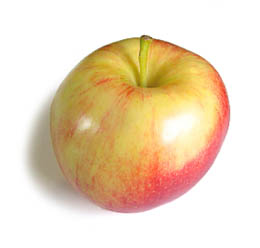
Jonathan Apple
- By FruitGuys Staff
- Last Updated On
- Reading Time: 3 mins.

New York gave us air conditioning, the tuxedo, the club sandwich, and—drumroll please—the Jonathan apple! Medium-sized, sweet, and a bit acidic, this heirloom apple from Woodstock is sometimes also called the Esopus Spitzenburg. Here’s a quick look at the facts about this tasty fruit.
What are Jonathan Apples?
Jonathan apples aren’t new on the market. They’ve been around since 1826 and were likely discovered in Woodstock, New York. They come from a seedling of the Esopus Spitzenburg—a variety Thomas Jefferson loved.
These medium-sized, deep red apples might look simple, but they pack in serious flavor. They were once popular commercially, but over time, they’ve been pushed aside by other varieties.
Today, they’re a favorite among heirloom growers and apple fans. Jonathan apples also have a bit of a legacy—they’ve been used to create other well-known apples like the Jonagold, Jonamac, and Jonafree. So even if you haven’t had a Jonathan, chances are you’ve tasted something descended from it.
Taste Profile of Jonathan Apples
Jonathan apples stand out for their unique taste, which hits a nice balance between sweet and tart. There’s a nice little tang upfront, followed by a smooth sweetness and just a hint of spice.
The Jonathan apple’s texture is crisp, juicy, and refreshing. Some say its flavor changes depending on the day it’s picked. Early in the season, Jonathans lean more tart—sharp and zesty. Later on, they mellow out, becoming a bit sweeter while still holding onto their bite.
That balance is why they’re great for almost everything, including snacking, baking, and cider.
Nutritional Profile of Jonathan Apples
Jonathan apples, like other apple varieties, are packed with essential nutrients that contribute to overall health and wellness. Here’s a quick overview of what these heirloom apples offer.
Low in Calories
One small apple contains about 100 calories, so it’s a diet-friendly snack.
Rich in Dietary Fiber
With more than 3 grams of fiber per apple, Jonathans are good for your gut. The fiber comes in handy for regulating digestion and helping lower cholesterol levels.
Packed with Antioxidants
Apples are known for their antioxidant properties, in part thanks to flavonoids—little plant pals that protect the body from oxidative stress and reduce the risk of chronic diseases.
Full of Potassium
Even a small apple is a potassium powerhouse, with more than 170 mg of the good stuff. Thanks to potassium, snacking on Jonathan apples can help maintain healthy blood pressure and a healthy heart.
A Hint of Vitamin C
Apples provide a modest amount of Vitamin C, which helps strengthen the immune system, improves skin health by boosting collagen production, and makes it easier to absorb iron from other foods.
Free From Fat and Cholesterol
Apples are fat-free and cholesterol-free, so they’re a heart-healthy snack.
Storage Tips for Jonathan Apples
To keep your apples fresh and crisp, store them uncovered in a cool, shady spot—away from heat and direct sunlight. They’ll stay good for up to two weeks at room temperature.
Want them to last longer? Toss them in the fridge and they’ll keep for three to four weeks. Some people find they’re even more refreshing chilled.
One thing to avoid: Don’t seal them in a drawer or bag. Apples naturally release ethylene gas, which speeds up ripening. Trapping that gas in a small space can make your apples go soft faster. So give them some air, keep them cool, and enjoy the crunch while it lasts.
FAQs
1. What makes Jonathan apples unique?
Their sweet-tart flavor with a hint of spice, fine-grained juicy texture, and heirloom status make them stand out. They’re also a parent to varieties like the Jonagold and Jonamac.
2. How can I use Jonathan apples in cooking?
They’re great for pies, crisps, cider, applesauce, and even caramel apples—firm enough to hold their shape and flavorful enough to shine without much added sugar.
3. How should I store Jonathan apples?
Keep the Jonathan apples uncovered in a cool spot away from sunlight and heat. They’ll last up to two weeks. For longer storage, refrigerate them (not in a drawer or bag) to keep them fresh for three to four weeks.
Want farm-fresh fruit?
We've got you covered.Recent Articles
Remembering Frieda Caplan, Queen of the Kiwi
Donate-a-Crate Makes Corporate Giving Easy and Tasty
8 Avocado Varieties To Try (And When to Taste Them!)
When to Send Snack Care Packages to Employees: An HR Guide
The FruitGuys Delivers Fresh Groceries to 200 Federal Workers
Subscribe to our Newsletter
"*" indicates required fields