
Sweet-tart Gravenstein apples first arrived in California in 1811, and the trees in farmer John Kolling’s orchard in Sebastopol are almost old enough to remember.
“Most of the old Gravs are huge trees—35 feet tall and spreading like crazy,” John told The FruitGuys. “They were planted around 1895.”
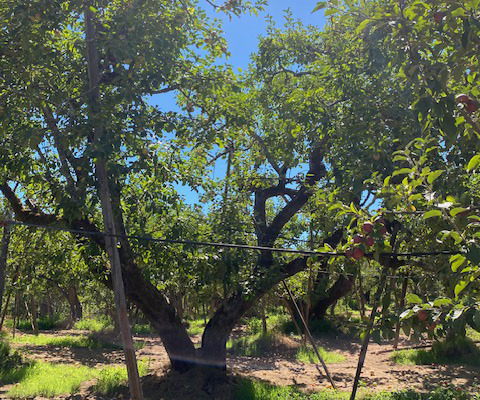
Every August, John supplies The FruitGuys with rare, organic Gravenstein apples for our Annual Gravenstein Apple Box. The story of his towering trees and how he came to care for them is full of surprises. It starts in the 1970s, when John picked up a book that changed his life.
In the ‘70s, John was living in Silicon Valley and working as an engineer. He was burned out from the combination of the “Palo Alto rat race” and an unhappy marriage. That’s when he picked up the book Johnny Appleseed: Man & Myth by Robert Price. It’s a deep dive into the life of the American folk hero and apple evangelist John “Appleseed” Chapman. Reading it, John fell in love with the idea of tending an apple orchard.
“I decided to just pack it all up and try farming, even though I knew nothing about farming. I moved up to Sonoma County and started asking the neighbors and learning by watching and asking questions,” John said.

He bought a 25-acre orchard and named it Appleseed Farms in honor of Johnny Appleseed.
There was only one farmer in John’s family—a great-uncle who raised pigs, chickens, and a few fruit trees—so he had to figure things out for himself. John tried spraying his trees with conventional chemicals like his neighbors, but they made him and his hired hand sick.
“I said to my worker, ‘This is not right! I don’t want to be getting sick all the time, and I’m sure you don’t. We’re going to go organic,’” John recalled.
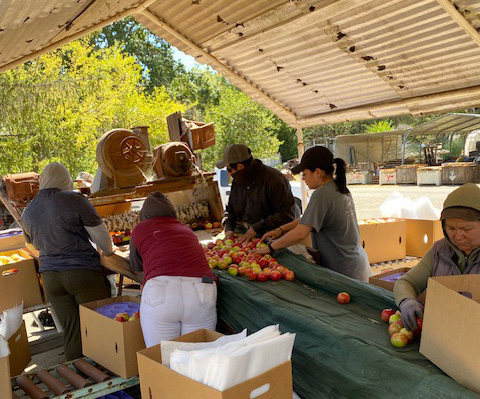
John joined California Certified Organic Farmers and became a pioneer in organic apple farming. By the 1980s, he had 650 acres in production (mostly leased), and business was booming. According to John, he was the first to successfully market organic applesauce commercially. He also supplied apples to retailers for organic juice, cider vinegar, and drying.
But the apple empire didn’t last. Canneries started closing or moving to Washington, and the 12-hour days started wearing John down. He began to turn his leases over to other growers.
Today, he’s 75 years old and still farms his 25-acre homestead. The small but fruitful orchard is home to about 50 apple varieties, including favorites like Fujis and Galas, and heirlooms like Rome Beauties, Newtown Pippins, and—of course—Sebastopol Gravensteins.
John has handed off most of his orchard, but he kept the section filled with endangered, ancient Gravenstein trees. And we’re glad that he did! Appleseed Farms supplies some of the most delicious organic fruit for our Annual Gravenstein Apple Boxes.
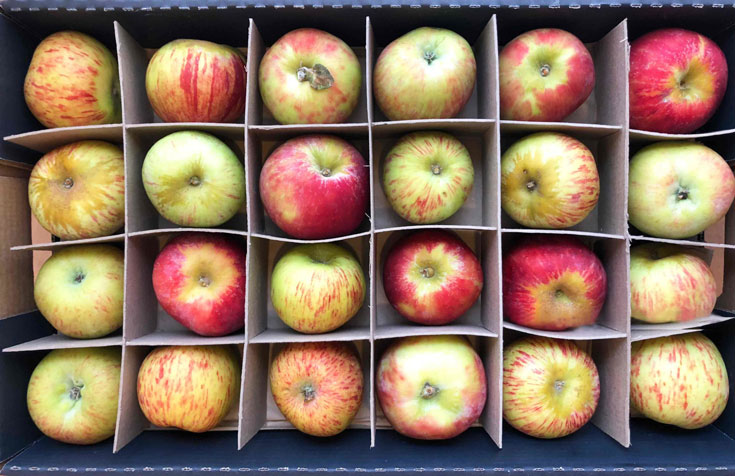
When we called John in July to check in on the 2025 crop, he told us the fruit was looking larger than last year, thanks to the cooler weather. The trees were so loaded that he had to prop their limbs up to keep them from breaking.
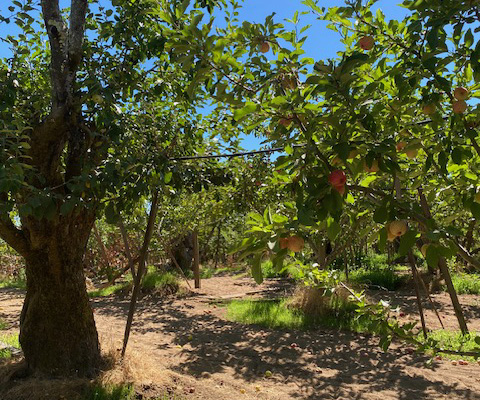
Some of those trees are big enough that “two people standing at the base with their arms stretched out in a circle can’t touch their fingers together”—about five or six feet across. Their sheer size can intimidate workers used to harvesting from semi-dwarf plum and cherry trees.
John chuckled as he said, “[The workers] come here and all of a sudden they look at these trees, and they’re like oaks, they’re so big! They look up at them, look at me, and look back to the tree—they can’t believe it. It’s kind of fun to see their reaction. They’re like, you expect me to get up in that tree with a ladder and pick it?”
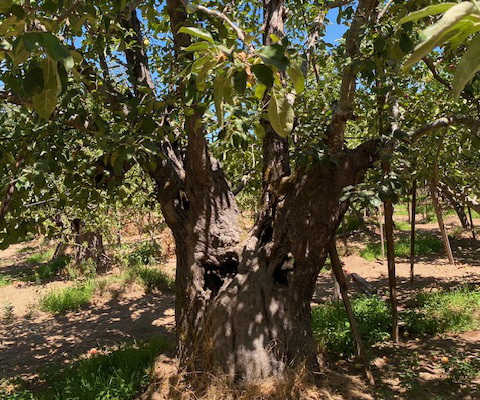
Luckily, John has a team of regulars to show them how it’s done.
When we asked John why he’s still farming in his 70s, he pointed to those ancient apple trees and “the mystery of nature” as his motivation.
“I get inspired by the fruit trees and how they can produce fruit for humans to eat, and they do it year after year after year, and for the most part, they stay healthy,” he said. “It’s kind of like a little miracle, actually. And then we farmers help the miracle along by pruning and spraying and cultivating and irrigating, all of those operations. But there are some trees you come across walking in the wild that do fine without any human intervention at all for decades.”
John explained that the mystery and beauty of those wild trees inspired him to “join in with these trees and form some sort of friendship or partnership with them and see what we can do together.”
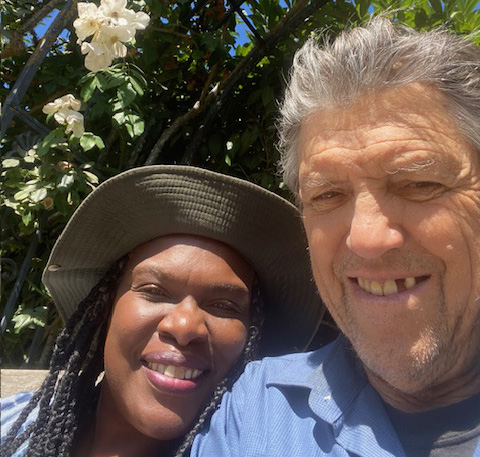
The Sebastopol Gravenstein apple is an endangered fruit. And despite the best efforts of farmers like John, it’s getting rarer every year.
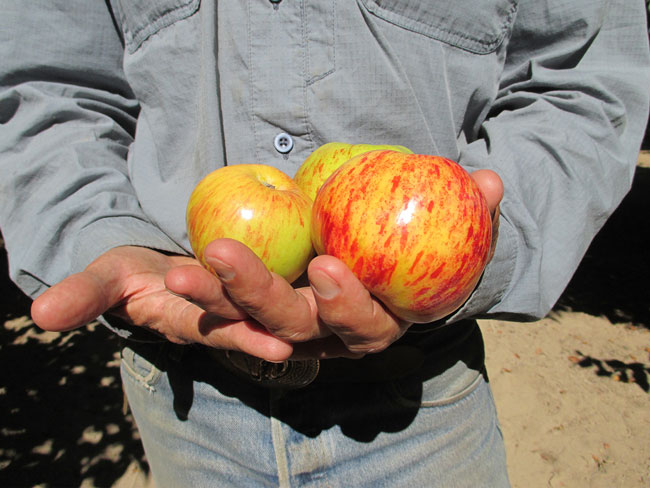
Sonoma County had more than 7,000 acres of Gravenstein apple orchards in 1937. In 1970, there were only 4,421 acres, according to that year’s Sonoma County Crop Report. The 2023 report shows just 619 acres left. Rising land values and labor costs, more profitable wine grapes, and cheaper imported apples are all working against the Grav. Now, at 130 years old, John’s beloved trees are starting to die of old age.
But all isn’t lost! The best way to preserve this short-season, sweet-tart apple is to buy and eat it. It’s in season for just a few weeks each August. John likes to eat his Gravensteins raw when they’re fresh from the orchard near the start of the season. They’re also famously delicious baked into pies, tarts, and breads, or turned into juice and sauce.
Wondering where to buy Gravenstein apples so you can do your part to save them? Consider ordering The FruitGuys’ Annual Gravenstein Apple Box filled with delicious sweet-tart Gravensteins. We deliver to offices, schools, and homes across the country, and the box directly supports farmers like John. We pay them for their fruit and give them an extra 16% of the proceeds from every box sold—hopefully encouraging many more years of Gravs to come.