
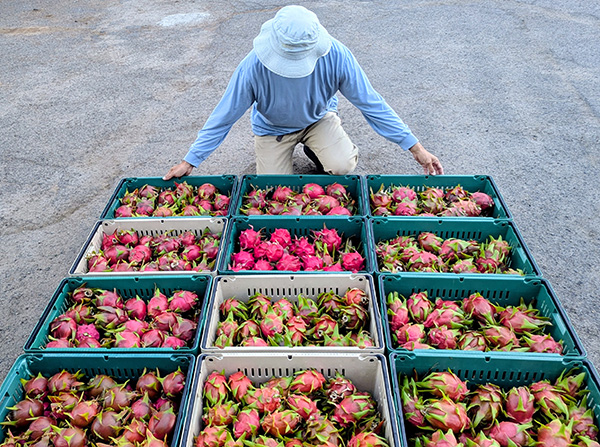
Most kids grow up dreaming of life as a pro athlete, a doctor, or an astronaut—or maybe even a singer or a pirate! But Ken Tseng knew from childhood that he wanted to be a farmer.
“I grew up in Southern Taiwan when I was a kid, and I have very good memories of roaming around in my relatives’ orchard, picking longan and mangoes off the trees and just eating them right there,” Ken told The FruitGuys.
What he didn’t know was that one day he’d own Fortule Farms, a small family farm in California filled with more than 20 varieties of organic dragon fruit. In 2026, Ken partnered with The FruitGuys to deliver his fresh tropical fruit to offices and schools.
Ken put his farming dreams on hold to become a scientist. He moved to the US and manufacturing and selling scientific instruments—but he never stopped growing food.
“If I had a small piece of land, even an apartment, I would try to grow things in pots,” he remembered. “Even living in New York City, where I didn’t even have a balcony, I was playing farming computer games.”
Ken started collecting fruit trees as a hobby. He rented a house to fit them all, but soon, the backyard overflowed with rare dragon fruits, guavas, and loquats. So he decided to go bigger.
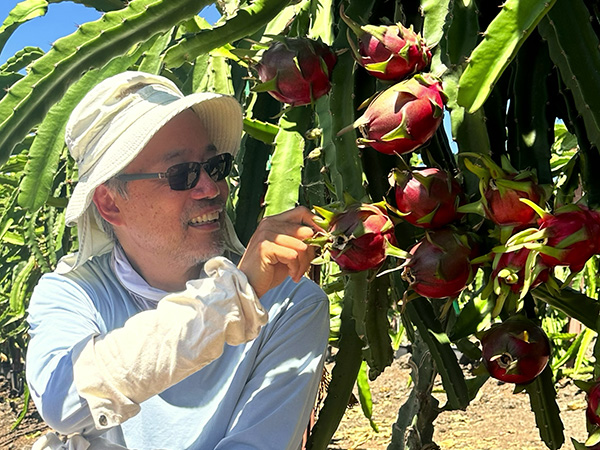
Ken and his wife eventually discovered a struggling lemon and avocado farm in Escondido, California. A developer had purchased the 70-acre property to turn it into housing, but the deal fell through.
“They were keeping the trees alive, but only barely,” Ken said.
Ken purchased the property in 2021. He cleared out the trees and started fresh with groves of dragon fruit, guava, and cherimoya. He named the farm “Fortule” (pronounced “for-too-lee”) in honor of his late friend Giovanni “Nino” Cupaiuolo, who developed the similarly named Fortuna cherimoya.
Three years later, Ken’s first trees finally started to bear fruit.
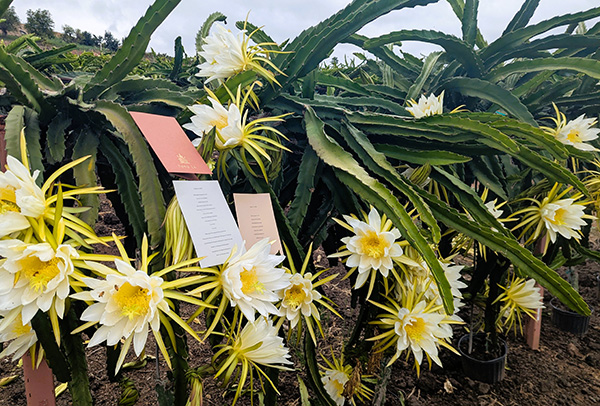
Today, Ken grows over 20 commercial dragon fruit varieties alongside guavas, loquats, cherimoyas, and other unique tropical fruits. The dragon fruit is his pride and joy: He’s constantly adding new varieties and experimenting with the ones he has to improve their size, appearance, and flavor.
This is tricky business because many dragon fruits need to be pollinated by hand. Ken walks through the farm each season, tapping pollen from their flowers into a plastic cup, then transferring the pollen from one plant to another with his fingers. It’s a labor-intensive process—but the results are delicious.
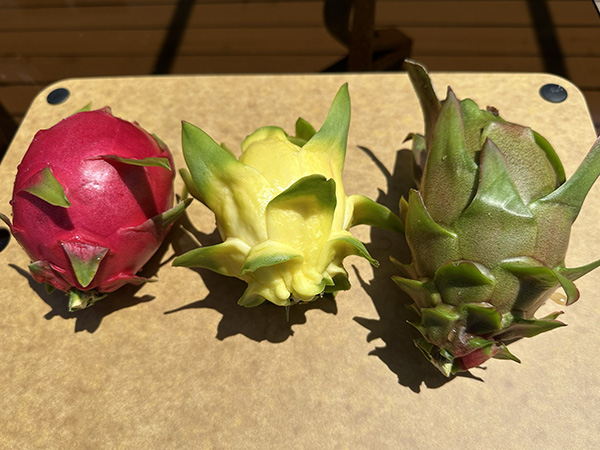
Some of Ken’s dragon fruits have pink skin and white flesh. But others are green or yellow outside, with red or magenta fruit within. Some are bigger than a softball, and some are smaller than a fist! He picked each one for its unique taste.
“At this point, most people still think white flesh is tasteless based on imported fruit from Vietnam, but there are varieties of white flesh that taste just as good as any of the magenta or red,” Ken said. He later added, “Don’t judge a dragon fruit by its flesh or skin color.”
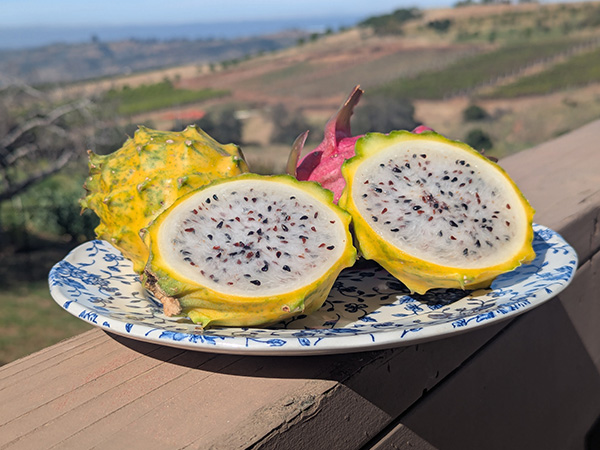
Ken is on a mission to expose people to dragon fruits they might not have tried. He specializes in varieties you can’t find in most stores, like sweet-tart American Beauty Fortule dragon fruits (a mystery variety he named for his farm), which can grow up to 2 pounds, and tiny Sugar Baby dragon fruits.
“The Sugar Baby is very flavorful and very sweet, and has a unique floral flavor. It’s one of the best-tasting dragon fruits out there,” Ken said.
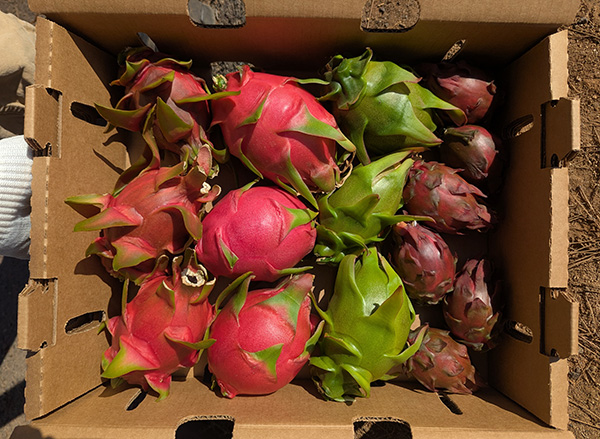
In Ken’s fields, there’s a dragon fruit for everything. Dark red dragon fruits make delicious and vibrant sorbet, while magenta varieties add a colorful pop to salad (and won’t stain your fingers like their red cousins). For snacking, try the Sugar Baby—it’s bite-sized and sweet all the way through.
Ken’s passion for farming extends to keeping his land fertile for future generations.
“We practice no-till farming, we’re organic certified, and we hand-weed most of the dragon fruit,” Ken said. “We also hand-pollinate, hand-prune, and hand-harvest.”
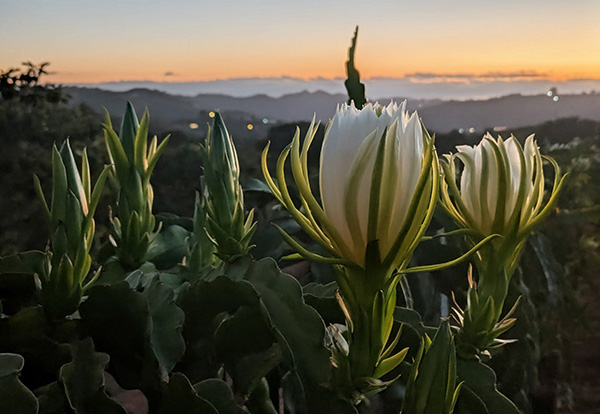
Ken also practices trap cropping. He plants fig trees close to his dragon fruit to lure in birds, which eat the figs and leave the dragon fruits alone. It’s a smart way to keep the most flavorful fruits in peak condition until they’re ready to harvest and enjoy.
Fun fact: Dragon fruits stop ripening as soon as they’re picked. So if you buy one, it will always be ready to eat!
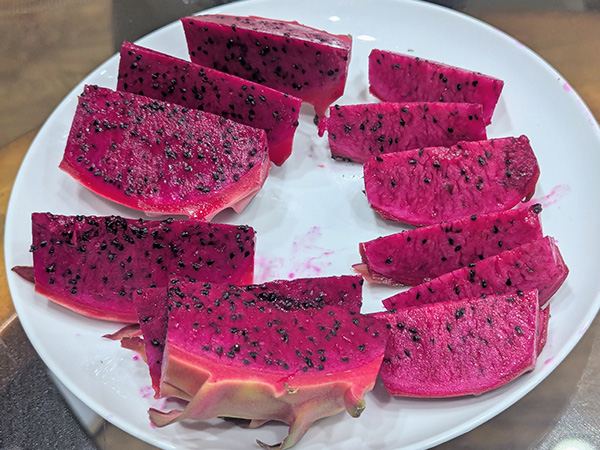
Look for farmer Ken’s Sugar Baby and magenta dragon fruits in The FruitGuys’ regional fruit mixes, especially if you’re in California. We like to tuck them in occasionally during peak season from July through December. You can also order dragon fruit in bulk for your office or school. It’s a great way to support a small, family-owned farm stewarding the land we all call home.