
I grew up outside of Philadelphia, and reminders of the American Revolution were everywhere in my childhood. We hiked through the forests of Valley Forge National Historical Park and played in its log cabins, which are replicas of shelters George Washington’s army built during the winter of 1777–1778.
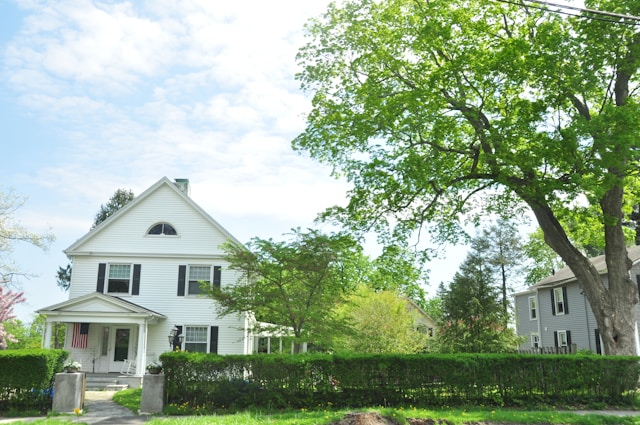
There was also a stone colonial farmhouse just around the corner from the house I grew up in. It was still in amazing shape thanks to its modern owners. When I walked past its old wooden fence, I often wondered what the farm must have been like when it was still in operation.
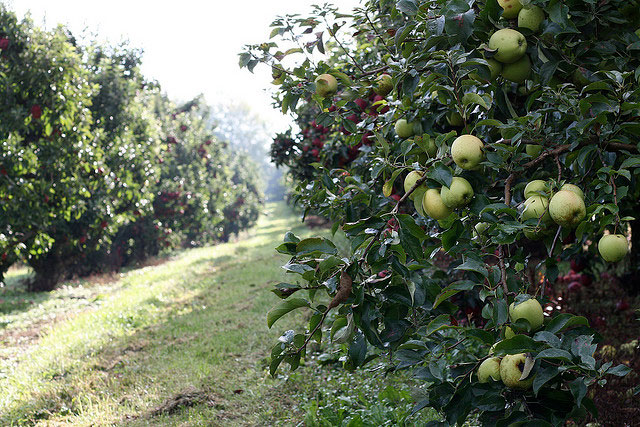
For one thing, it probably had an apple orchard. Here are some fun fruit facts about colonial times, just in time for Fouth of July.
Apples store well in the wintertime, even without modern refrigeration, and colonial people used them to feed their families and livestock. Since the local water wasn’t always safe to drink, they also drank a lot of alcohol, including hard cider made from apples. Apparently, President John Adams even drank hard cider for breakfast!
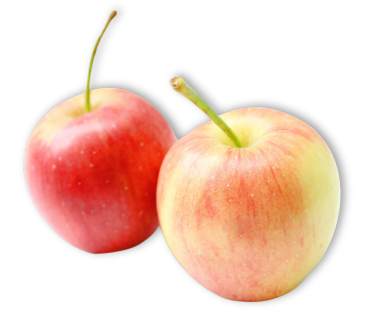
Fun fact: Crab apples are the only apples native to America. Colonists brought other varieties, but historical rumor has it that American orchards didn’t produce well in the early 1600s, because America had a serious lack of honey bees. Once colonists brought bees over from England in 1622, apple crops improved—and it’s a good thing they did. According to the historians at Mount Vernon, apple pie was one of President George Washington’s favorite desserts.
Of course, apples weren’t the only fruit that Pennsylvania colonists grew. If I time-traveled back to the 1700s, I might have also seen pears, peaches, plums, berries, and grapes (for wine) growing beyond that farmhouse’s fence. Some of those fruits are native to America—like strawberries—but many traveled here with explorers or settlers.
A lot has changed about food and farming since the first Independence Day in 1776, but a lot hasn’t. An orchard is still a group of trees planted in the ground that has to be pruned and cared for before it bears fruit. And two of our Pennsylvania farm partners, Kauffman Orchards and Frecon Farms, grow peaches, plums, and apples, just like the early settlers.
Fruit isn’t exactly a pathway to the past—it’s too perishable for that—but it’s fun to imagine eating the same apple as a colonial farmer separated by 250 years. If you enjoy an apple pie on Independence Day, I hope you remember these Fourth of July fruit facts, and that you get a little taste of history along with the fruit.