
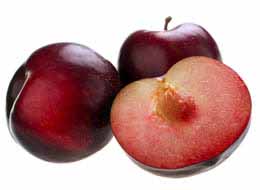
Pluot (PLOO-awt)—it’s fun to say and great to eat! This sweet-tart fruit is part plum, part apricot, and totally delicious. Here’s a quick look at the pluot basics.
If you cross-pollinate a plum and an apricot, you get a plumcot; crossing a plumcot with yet another plum creates a pluot. That means pluots are more plum than apricot—somewhere between three-fifths and three-quarters plum.
Developed in the late 20th century by Midwest biologist Floyd Zaiger, pluots have a vibrant tart-sweet flavor, smooth skin, and a juicy interior that makes them perfect for snacking. They’re high in vitamins C and A and, like most fruits, are a good source of dietary fiber. When choosing a pluot, look for one that’s slightly firm but has a gentle give when you squeeze it.
What really sets pluots apart is their flavor. They have a delightful sweetness, often described as candy-like, with subtle floral and fruity notes. Their higher sugar content compared to plums and apricots gives them a more intense sweetness, while their low acidity keeps the flavor smooth and balanced. When ripe, pluots give off a light-but-sweet aroma that hints at the deliciousness inside.
Pluots are as pleasing to the eye as they are to the palate. Their thin, glossy skin comes in a wide range of colors—from deep purple to golden or even multicolored, depending on the variety. The color of the flesh can also vary, ranging from pink and red to white, yellow, or orange. Each pluot variety has its own unique characteristics. Here are a few of our favorites.
Petite pluots are perfect for snacking. Here’s a detailed look at the nutritional benefits you’ll gain from one serving (two raw pluots, or 154 grams).
Calories: Pluots have just 69.3 calories per serving, making them a light and healthy snack option.
Protein: Each serving provides 1 gram of protein, which is essential for muscle repair and growth.
Fat: Pluots are fat-free! That makes them a heart-healthy choice.
Carbohydrates: Two pluots have about 16.9 grams of carbohydrates, primarily from natural sugars (15 grams). They’re a good source of energy that won’t spike your blood sugar as much as processed sugary snacks.
Dietary Fiber: Two pluots pack in 2 grams of fiber, so snacking on them can boost your digestion, help lower your cholesterol, and keep you full.
Vitamin C: Oranges aren’t the only fruit full of Vitamin C—just one serving of pluots can provide 24% of what you need in a day. This all-around great vitamin supports immune function, skin health, and iron absorption, helping protect your body from infections.
Vitamin A: One serving of pluots will give you about 10% of the Vitamin A you need in a day. That means pluots support good vision, skin health, and more.
Calcium: One serving of pluots sneaks in about 9.24 milligrams of calcium, which helps keep your bones healthy and strong.
Iron: One serving of pluots only has around .19 milligrams of iron, but a little is better than none! Iron helps your blood transport oxygen and can help prevent anemia, a blood disorder triggered by a lack of functional red blood cells.
Sodium: Pluots are sodium-free, so you can enjoy them without worrying about increasing your blood pressure or risk of hypertension.
Cholesterol: Last but not least, pluots are cholesterol-free, too! That’s more great news for your heart health.
To keep your pluots fresh and tasty, you need to ripen and store them correctly. Follow these quick and easy steps for the best results.