
Did you know that until the 17th century, the word “apple” was a catch-all term for every kind of fruit except for berries? A pear was an apple, an orange was an apple—even nuts were called apples! Perhaps it’s no surprise that eventually, the name stuck to what would become America’s favorite fruit.
Of course, there is still a whole universe of apples available for office snacking. They come in almost every color, shape, and size, and range in flavor from sweet to tart. But what are the sweetest apples you’ll likely encounter? How about the tartest? To help you on your apple adventures, our workplace fruit delivery experts at The FruitGuys created this flavor chart. It features fifteen varieties we often add to our fruit delivery boxes. Click the image below to download your own copy.
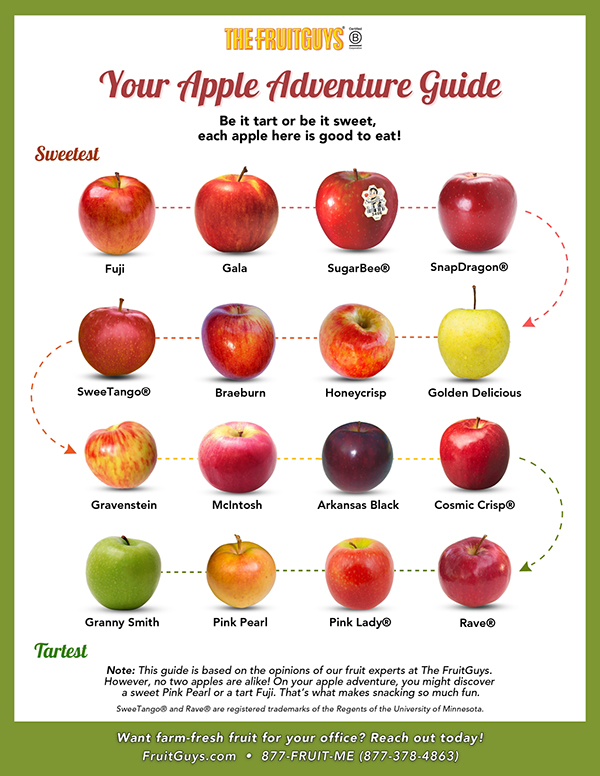
Read on to learn more about each of these apple varieties, from the candy-sweet Fuji to the pucker-you-up Granny Smith.
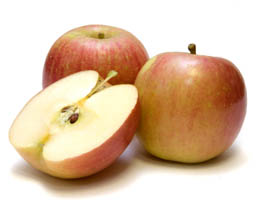
This baseball-sized apple gets its name from Fujisaki, Japan—the closest town to the orchard where botanists developed it in the 1930s. Crispy and ultra-sweet, Fujis are the sweetest apples on our chart. They’re a winning combination of the Red Delicious and Rawls Jennet varieties. Fun fact, the Rawls Jennet (which has gone by a dozen other names and spellings, including Red Neverfail and Jefferson’s Pippin) was a favorite of Thomas Jefferson. You can still buy Rawls Jennet trees at Monticello.
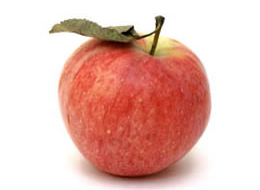
You’d think that crossing a Golden Delicious and a Kidd’s Orange Red would produce a gorgeous orange apple, but surprise—you get a Gala instead! This sweet, mild, striped apple hails from the island of New Zealand. It first appeared in the 1930s and earned its US patent in 1974. If you’re lucky, when you bite through its thin skin you’ll get a hint of holiday spice.
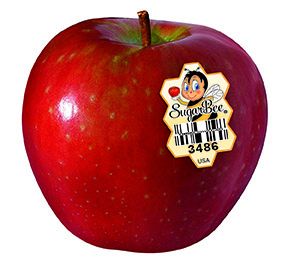
A Minnesota descendant of the Honeycrisp apple, the SugarBee® is crisp, juicy, and decidedly sweet. Enjoy it out of hand for a healthy snack, or chop and add it to yogurt or your favorite salad. The name SugarBee® is a nod to the apple’s flavor and the bees that created it in the 1990s. As the apple legend goes, one sunny spring day, a honey bee was buzzing through an apple orchard, collecting nectar and cross-pollinating apple blossoms along the way. The honeybee stopped at an unknown tree and collected nectar and pollen from a blossom. As the day went on, the little honeybee passed that pollen onto a Honeycrisp tree, creating the SugarBee® apple!
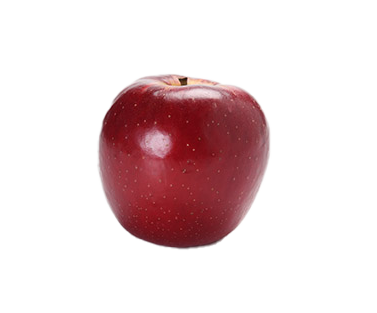
Like the SugarBee®, the SnapDragon® is a fruit love child of the Honeycrisp apple. Cornell University’s apple breeding program brought it into being and dubbed it the SnapDragon® for its crisp texture and “monster crunch.” According to the experts at Crunch Time Apple Growers, this fire-breathing fruit is “spicy-sweet” with a hint of vanilla. Try it with a chunk of cheese or dunked in peanut butter. Fun Fact: The SnapDragon® is the official apple of the Buffalo Bills football team.
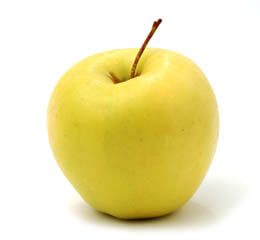
The Golden Delicious is a demure southern bell, with a soft texture, yellow-gold skin, delicate fragrance, and mild, sweet taste. Farmer Anderson Mullins first discovered the apple growing wild on his West Virginia family farm in 1912. Today, it’s West Virginia’s state fruit and even has its own festival. Rumor has it the Golden Delicious is a granddaughter of the Grimes Golden—another West Virginia apple that just might have been planted by Johnny Appleseed himself.
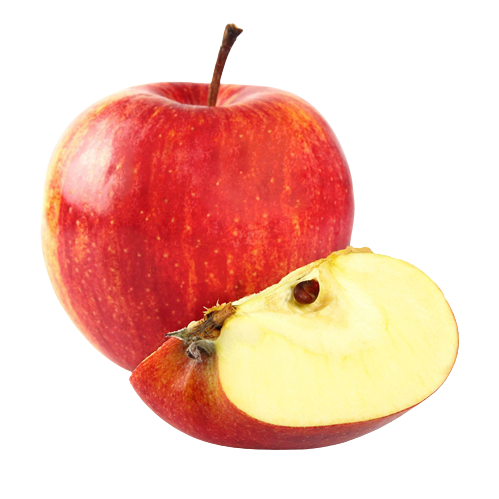
The Honeycrisp (aka Honeycrunch) is a dependable apple, sweet with little acidity and a crisp, juicy texture. It’s also a fall beauty queen! Its yellow-green skin comes striped and spotted with orange, pink, and red. This standout apple came from the University of Minnesota, which credits it with helping to save the local apple industry. Minnesota named the Honeycrisp its state fruit in 2006.
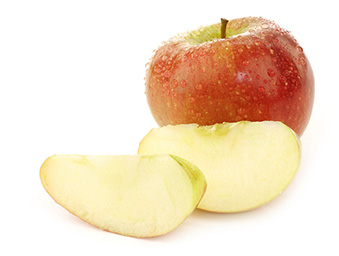
Born in New Zealand in 1952, the Braeburn’s thin yellow-green and orange-red skin hides a crunchy, juicy interior with high levels of both sweetness and acidity. It’s the parent to modern varieties like the Jazz and the Envy. Eat it as a snack, turn it into apple sauce, or slice it over your salad at lunchtime for an extra bit of crunch. Fun fact: Rumor has it this apple got its name from the first orchard that grew and sold it, Braeburn Orchard in New Zealand.
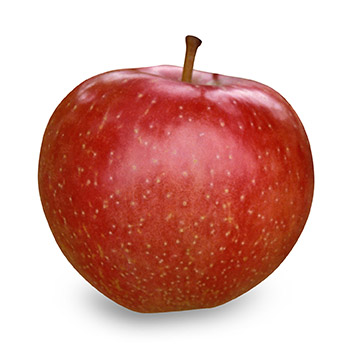
Crisp, juicy, and distinctly flavorful, the SweeTango® apple is sure to wake up your taste buds! This Gen Z apple was born at the University of Minnesota in 2009 to parents Honeycrisp and Zestar. It has a bit more fiber than most other apples, clocking in at five grams. Next time you taste a SweeTango®, see if you can identify its signature notes of honey, citrus, and spice.
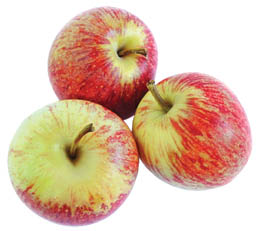
Don’t tell the rest of the orchard, but the Gravenstein just might be our favorite apple. Introduced to California by Russian trappers in 1811, the Grav put down deep roots in Sonoma County agriculture. Then, the wine grape industry nearly chased it out—but Grav farmers stood strong! Today, a rare few still plant this sweet-tart heirloom apple ideal for baking, cider-making, and snacking. Every year, The FruitGuys sells a special Gravenstein Apple Box to benefit Grav farmers. It’s our way of showing support for a delicious endangered fruit.
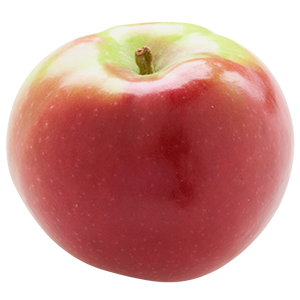
Ahh, the McIntosh! Before its name became popular thanks to speakers and computers, this humble apple was the pride of Canada. In 1811, farmer John McIntosh of Ontario discovered apple trees growing wild in the Canadian woods. He transplanted several seedlings to his garden, and the one that survived became the granddaddy of all McIntosh apples! The Mac is tart and crisp, with bright red skin and white flesh.
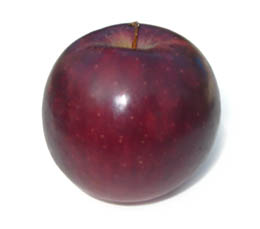
If “tall, dark, and handsome” were an apple, it would undoubtedly be an Arkansas Black. These heirloom apples are striking to look at, with skin so dark red it’s nearly purple! Flavor-wise, the Arkansas Black is hard to beat. It starts crisp and tart-sweet with cherry notes and slowly reveals hints of cinnamon, vanilla, and coriander. The apple’s parents are a mystery, but the illustrious Winesap is a major contender. Snag the darkest-colored apples you can find to get the most flavor bang for your buck.
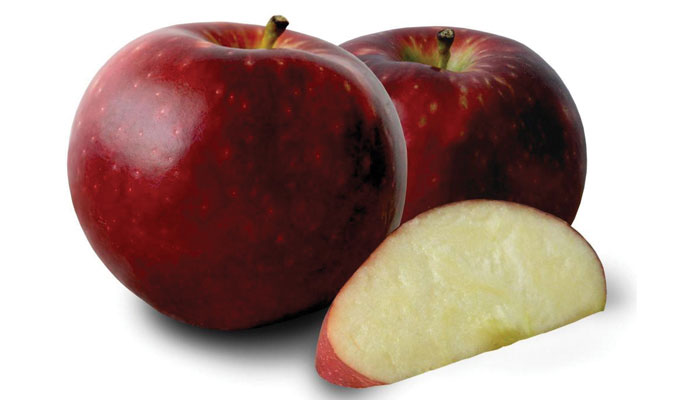
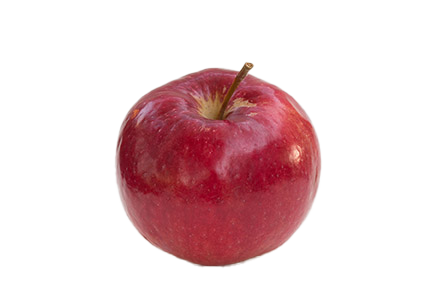
If you’re a fan of tart treats, you just might rave about the zippy flavor and delectable crunch of this Gen Alpha apple variety, which hit the market in 2017. It’s a cross between the Honeycrisp and the MonArk (an Arkansas varietal) masterminded by the fruit folks at the University of Minnesota. Like the Gravenstein and the Ginger Gold, the Rave® is an early-season apple that ripens up in August, so look for it as a late-summer treat.
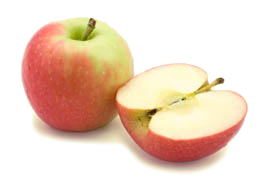
The Pink Lady® apple is plunder from down under! It appeared in 1973 when Australian plant breeder John Cripps crossed the fan-favorite Golden Delicious and the Lady Williams, creating the Cripps Pink. The tastiest descendants of the Cripps go by Pink Lady®. This apple’s skin ranges from pinky-yellow to red with a green blush. Under it all, you’ll find creamy, sweet-tart flesh with notes of honey.
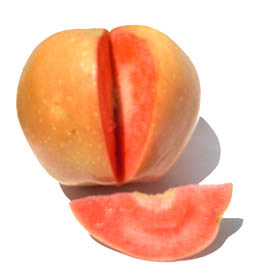
To remember the Pink Pearl’s name, think of its yellow-green skin as the oyster—and its gorgeous pink-to-red flesh as the pearl inside. This California heritage apple is a descendant of the red-fleshed Surprise variety from Turkey. The Pink Peal is more tart than sweet and can be a little on the softer side. Horticulturist Albert Etter created the cross in 1944, so it has been around since WWII!
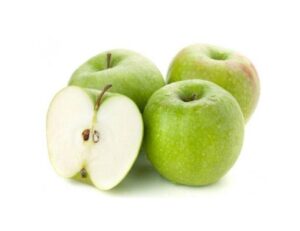
Perfect for bakers and sour candy lovers, the Granny Smith is one of America’s favorite apples. But like the Pink Lady, it hails from Australia. That’s where Maria Ann Smith—the original Granny Smith—discovered it growing from her compost pile in the 1860s. Legend has it that the variety originated from the seeds of a crab apple that Maria Ann Smith tossed out. Whatever its origin, there’s no doubt that the Granny is a pucker-you-up treat that pairs perfectly with cheese.
These are just a handful of the apple varieties that The FruitGuys sources. We often get them from small family farms like Cuyama Orchards and Devoto Gardens & Orchards in California, and Kauffman Orchards in Pennsylvania. Check out our fruit delivery boxes if you’d like to enjoy the full spectrum of apple flavors.