
“Hey, Fruit Lady,” the man sitting in the row behind me whispers, “Hey, Fruit Lady, what is this?”
I peer back over my shoulder to see him holding up a piece of The FruitGuys’ fruit he just peeled. It’s some kind of citrus, and I can see curls of dark orange skin in his lap. He peels apart sections of the fruit and shows me one that’s orange with a red blush. It almost looks as if someone poked the orange slice with a needle and injected red food coloring inside.
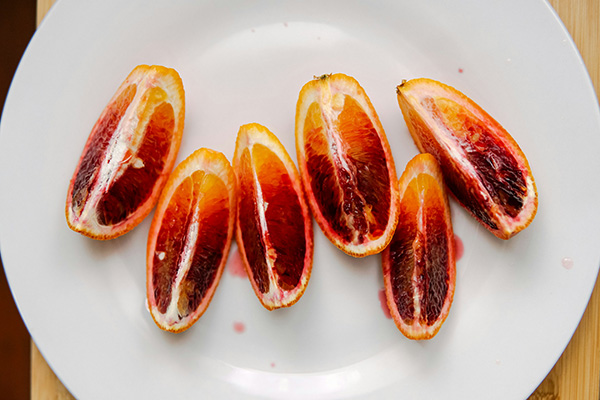
I smile and whisper, “It’s a blood orange!” I always get excited when I realize that someone is trying a new fruit from a FruitGuys box—even if it’s in the middle of a conference.
“Why are they red?” the gentleman asks me.
“It’s the anthocyanins,” I explain, “antioxidant pigments found in fruits, vegetables, and flowers. Anthocyanins can look red, pink, purple, blue, or black. They’re anti-inflammatory, too.” Blood oranges come by their color naturally. They’ve grown in the Mediterranean since the 19th century, possibly earlier.
“How is it?” I ask the gentleman as he finishes a bite.
“Good,” he replies, “a little tart.”
That sounds like a typical blood orange. They’re juicy and sweet, with a tart, almost raspberry-like finish. I’m about to say so when we get a look from the instructor at the front of the room. His eyes say, “Quiet down!” We smile at each other and nod, enjoying the secret of this special fruit.
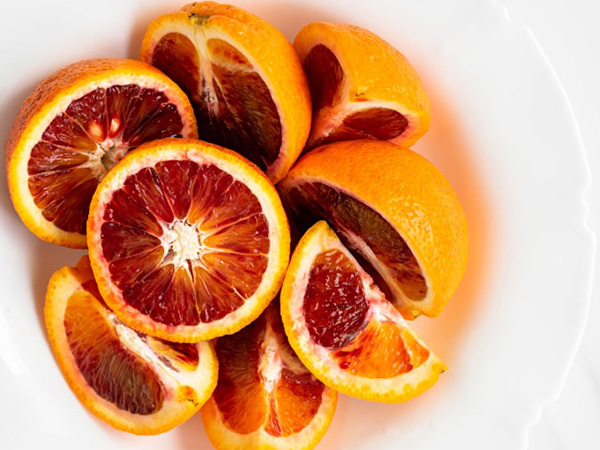
Blood oranges are just one of the many citrus fruits we’re still packing in our mixes, even as citrus season starts to wind down. You might also see sweet Gold Nugget tangerines, tangy Minneola tangelos, pink-fleshed Cara Cara oranges, and petite Pixie tangerines in your boxes this week.
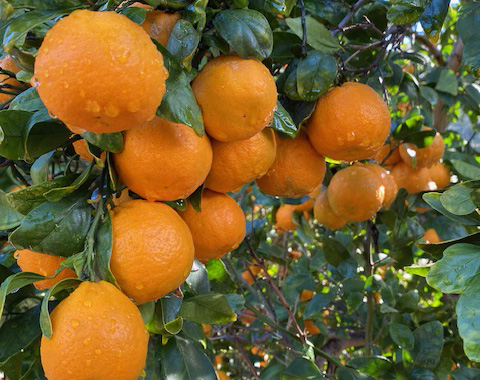
One of my favorite spring citrus fruits, the Ojai Pixie tangerine, is just arriving from our farm partners at Ojai Pixie Packers. Ojai Pixies are special Pixies grown in California’s Ojai Valley, where the local climate gives them an extra-sweet flavor. If you’re on the West Coast, look for them in your boxes in the coming weeks. We’ll also have Ojai Pixies available by the case! You can read more about this year’s crop here. Keep an eye on your inbox for details on how to grab a case for your office or family to enjoy.
We’re only about five weeks away from California cherries. Peaches and nectarines are on the horizon, too. If stone fruit season is your favorite, you don’t have much longer to wait, but I hope you’ll savor the flavors of citrus season while they last! As my new friend found out, juicy blood oranges and their fellows are truly something special.