
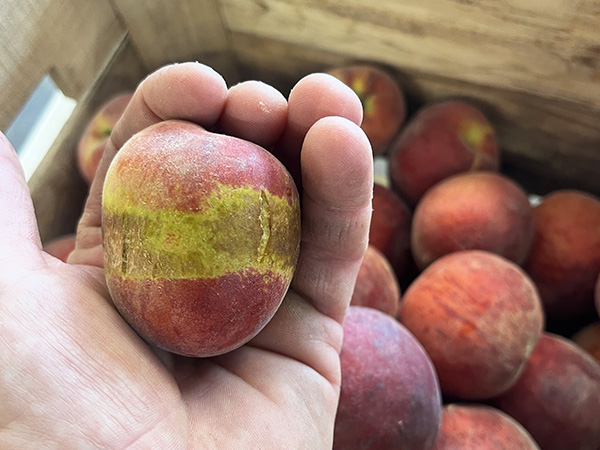
You might notice the occasional brown ring around an apple, pear, peach, or plum in your office fruit bowl. If it looks like a rough brown band that goes all or most of the way around—not a round brown spot—then it’s probably a frost ring! Frost ring is a cosmetic imperfection that’s totally natural and safe to eat.
We spoke to farmer Steve Frecon of Frecon Farms to learn more about how frost ring happens and why you don’t see it very often, even though it regularly appears in the orchard.
Frost ring is a visual defect that’s common in fruits like apples and pears, but it can also happen on stone fruits like plums and peaches. It’s a type of natural russeting that’s typically brown in color with a corky or net-like texture. Frost ring is unique because it doesn’t appear in random patches—it shows up in a fairly uniform ring around the fruit.
Frost ring can happen when “a frost or freeze” hits the orchard, according to farmer Steve. That temperature drop can damage both flowers and young fruit. If the fruit survives, the damage sticks around and shows up as frost ring.
According to the University of Kentucky Department of Plant Pathology, “Frost rings develop on fruit when ice forms beneath the fruit epidermis, separating the epidermis from the fruit flesh. Cork cells form in response, resulting in russeting.”
You can think of the frost ring as a tree ring recording the frost event!
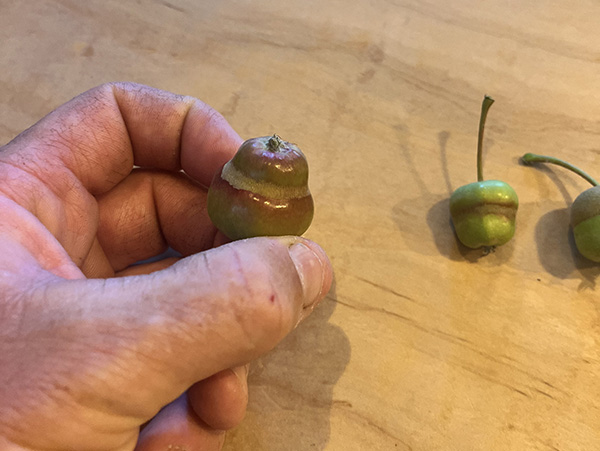
Yep, fruits with frost ring are totally safe for snacking.
“Frost ring doesn’t do anything to the inside of the fruit; it’s a totally cosmetic issue,” Steve told The FruitGuys.
You might even enjoy your fruit with frost ring more than fruit without! Sometimes russeting can have a slightly nutty flavor that’s delicious with the sweet taste of an apple or pear.
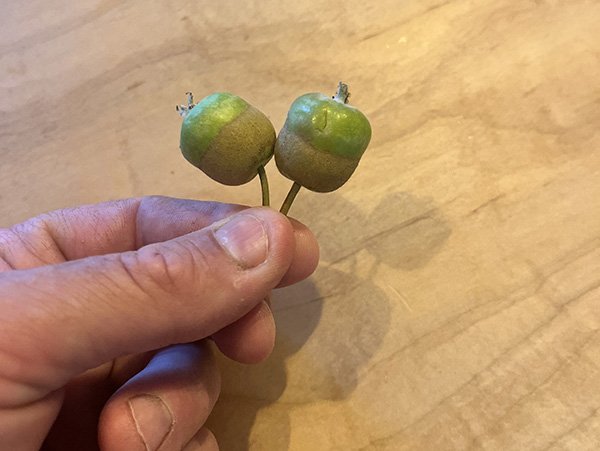
Frost ring happens all the time, but fruits with that unique look can be harder to sell. As a result, a lot of them are discarded before they make it to grocery stores or farmers market stands. When frost ring appears on apples at Frecon Farms, for example, Steve typically uses them to make cider.
“Normally, all of the apples with frost ring are thrown into the cider bin and would never make it to sale,” he explained.
You’ll only see fruits with frost ring for sale when times are tough—for example, when a bad freeze kills most of a crop. In those years, farmers like Steve sell every piece of fruit they can to help them stay in business for another season.
At The FruitGuys, we believe that flavor matters more than appearance. As long as the apple, pear, or other fruit tastes delicious, we’ll include it despite any minor cosmetic imperfections (or, as we like to call them, “fruit beauty marks”).
We also always strive to support small farms. When times are tough and farmers like Steve are selling apples and other fruits with frost ring or other types of safe-to-eat russetting, we feel it’s more important than ever to buy them.
As Steve puts it, “You help us out by not being so discerning about picture-perfect fruit.”
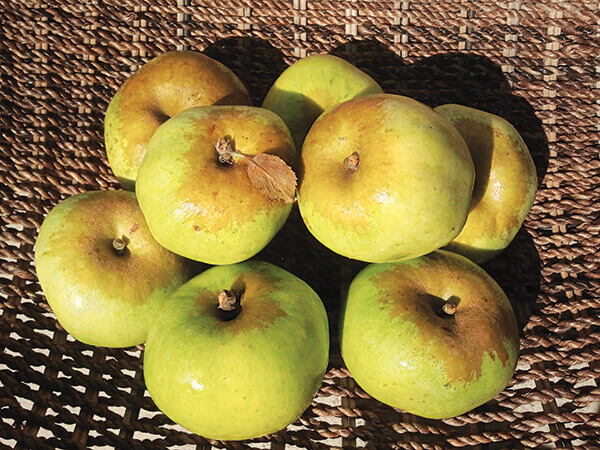
If you get a fruit with frost ring in one of your fruit deliveries, remember that it’s just a little wave hello from Mother Nature. Enjoy your snack and know that by enjoying it, you’re helping a farmer thrive.
Curious about other safe-to-eat imperfections you might see on your fruit? Check out our blog, “Why Doesn’t My Seasonal Farm-Fresh Fruit Look Perfect?” for a helpful guide to the most common fruit beauty marks.