
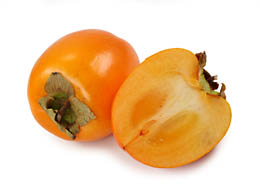
Few fruits transform quite like the Hachiya persimmon. Shaped like an acorn and glowing bright orange, it begins life firm and astringent, but give it time, and it turns into something magical. Once it’s soft and custardy, its flavor deepens into honey, cinnamon, and a hint of mango.
These Chinese fruits have traveled far since Commodore Matthew Perry first brought their seeds to the US in the 1850s, finding a home in American kitchens and office fruit bowls alike. If you’ve been lucky enough to taste one, you know they’re a special fruit.
Let’s take a closer look at what makes the Hachiya persimmon so unique.
Hachiya persimmons are one of the most recognized varieties of persimmons (Diospyros kaki). Their acorn-like shape and glossy orange skin make them easy to spot.
They’re classified as astringent persimmons, meaning they need to ripen completely before eating. When firm, they’re mouth-puckeringly tart; when ripe, they soften into a spoonable, silky texture that’s pure sweetness.
You’ll know a Hachiya persimmon is ready when its skin looks slightly wrinkled, and the flesh feels like pudding under the surface. That’s when it’s perfect for baking, blending, or scooping straight from the skin.
If you’ve ever bitten into an unripe Hachiya persimmon, you know it’s not an experience you want to repeat. But wait until it softens, and you’ll be rewarded with one of the most luxurious fruit flavors out there.
Ripe Hachiya persimmons taste deeply sweet and honeyed, with notes of brown sugar, cinnamon, mango, and apricot. Their texture turns silky and custard-like, making them perfect for dishes like scones, breads, and cookies.
Each bite captures the warmth of fall: soft, sweet, and quietly comforting.
Persimmons aren’t just beautiful—they’re a nutritious choice that provides a variety of health benefits. Beneath their golden-orange skin lies a powerhouse of vitamins, fiber, and antioxidants that make every spoonful as good for you as it is delicious.
A single persimmon, approximately 168 grams, has just 118 calories, making it an excellent option for those seeking a low-calorie, sweet snack.
Each fruit contains about 6 grams of fiber, promoting good digestive health and potentially aiding in cholesterol management.
Offering about 12 milligrams of Vitamin C per fruit, persimmons support immune system function, skin health through collagen production, and iron absorption.
Persimmons are rich in antioxidants like beta-carotene and cryptoxanthin, which help combat oxidative stress and may lower the risk of chronic diseases. One persimmon provides 425 micrograms of beta-carotene and 2,440 micrograms of cryptoxanthin.
With 270 milligrams of potassium per fruit, persimmons help maintain healthy blood pressure levels and support cardiovascular health.
Containing only 0.319 grams of total lipids and no cholesterol, persimmons are a heart-healthy addition to any diet.
Persimmons are a source of several important nutrients, including calcium, iron, magnesium, phosphorus, and manganese. They also provide vitamins B6, A, and E.
Each fruit has just 1.68 milligrams of sodium, making it suitable for low-sodium diets.
You can enjoy persimmons fresh, dried, or in recipes to add both flavor and nutrition to your meals.
Note: The US Department of Agriculture doesn’t offer nutrition information specific to Hachiya persimmons, so these numbers are based on its food details for Japanese persimmons.
To keep Hachiya persimmons at their best, it’s important to store them correctly. Let the fruits ripen at room temperature until the skin softens and the texture becomes custard-like; this is when their flavor truly shines. Once your persimmons are ripe, you can refrigerate them to extend their freshness.
Proper storage helps preserve their delicate sweetness and creamy texture so you can enjoy every spoonful at its peak.
Look for Hachiya persimmons in your local grocery stores or Asian markets! The FruitGuys doesn’t typically add Hachiya persimmons to our office fruit deliveries because when they’re ripe and ready, they’re so soft that they’re tricky to ship. Instead, we prefer their Fuyu persimmon cousins, which are delicious crunchy or soft! Learn more about the difference between the two varieties in our blog “Fuyu Persimmon vs. Hachiya Persimmon: Which is Best?”
Hachiya persimmon skins aren’t very tasty, so most people prefer to skip them. Scoop out the flesh to snack on and compost the skin.
A Hachiya persimmon is fully ripe when its skin becomes translucent and the fruit feels very soft, almost like a water balloon.
Yes, you can freeze Hachiya persimmons. It’s best to freeze them when they’re fully ripe to maintain their flavor and texture for later use in cooking or baking.