
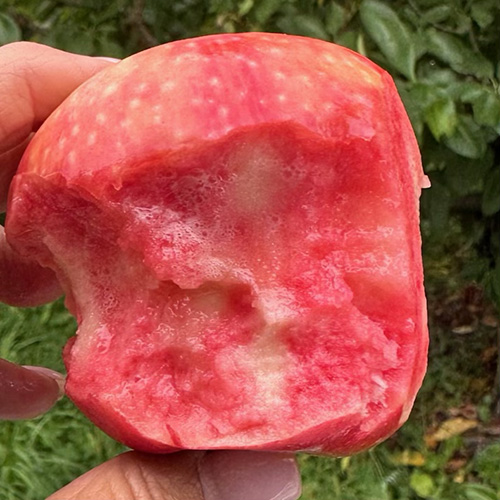
Have you ever bitten into an apple from the office fruit bowl and thought, “What on earth—why is it red inside?” You might have stumbled upon a cache of Lucy™ Rose or Lucy™ Glo apples, two special varieties of red fleshed apples that occasionally pop up in The FruitGuys’ office fruit mixes. If you get your hands on one, savor it, because you’ve found a rare treat!
Red fleshed apples have been growing in American orchards for decades, and they come by their color naturally thanks to genetics. Here in the US, heirloom red-fleshed varieties like the Pink Pearl (discovered in California in 1944) and the Airlie Red Flesh (first spotted in Oregon in the 1950s or ‘60s) have long excited apple farmers and inspired them to create new crosses.
When you cross a red-fleshed apple with a white-fleshed apple, you can get a brand-new red-fleshed variety. After trial and error, apple breeders can create new apples with unique flavors and fun looks—like the Lucy™ Glo and Lucy™ Rose.
“Breeding in the field is just like parents having kids. Each child will be unique, and if you keep playing with the same parentage, you keep getting different results,” apple farmer Bryan Peebles told The FruitGuys.
Lucy™ Glo apples (sometimes mistakenly spelled Lucy Glow apples) are a rare apple variety descended from the Honeycrisp and Airlie Red Flesh apple. Their sister apple, the Lucy™ Rose, has the same parents. Washington apple breeder Bill Howell created both Lucy™ apple varieties, and they’re extremely rare. Only about a dozen farmers grow them today!
One of those farmers is Bryan Peebles, a small Washington apple grower who sells his apples through The FruitGuys’ farm partner Chelan Fresh. He’s also Chelan’s export sales manager. Bryan is a fourth-generation farmer, and he planted the first Lucy™ trees in his orchard near Lake Chelan in north-central Washington back in 2017.
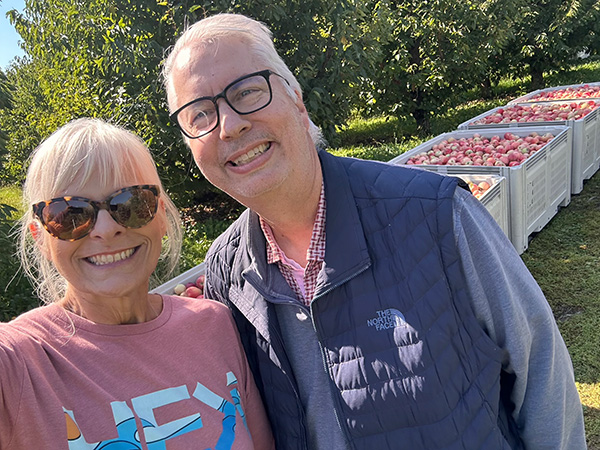
While we had Bryan on the line, we asked him a few common questions about his red-fleshed apples.
Lucy™ Rose apples are red on the outside, while Lucy™ Glo apples are yellow. They also have a different flavor.
“Both have citrus and berry notes to them, but I’d say the Lucy™ Glo has more citrus and the Lucy™ Rose has more berry,” Bryan said.
In other words, red-fleshed apples are good to eat! They taste delicious out of hand as a fresh snack, sliced over salads, or baked into colorful crumbles, tarts, and pies.
“The Lucy™ needs to be raised in a cooler climate at a higher altitude,” Bryan said. Washington, especially the drier north-central part of the state, is an ideal place for growing these apples.
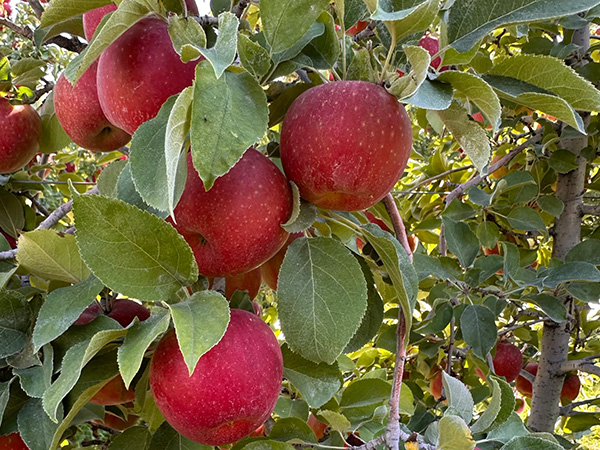
Nope! Lucy™ Glo and Lucy™ Rose apples are not genetically modified organisms (GMOs). Farmers created them by cross-pollinating Honeycrisp and Airlie Red Flesh apples, a traditional technique that’s been used in orchards for more than 100 years.
Lucy™ Glo and Lucy™ Rose apples have a short fall season. They peak in October and disappear by the end of December. As Bryan put it, “We’re generally out of them after Christmas.”
Next time you wow a coworker or friend by handing them a red-fleshed apple to taste, consider sharing these fun facts too.

You might get one apple that’s fire engine red inside and another that’s pale pink, even if they’re from the same tree. Bryan said this is because of the conditions in the orchard.
“Direct sunlight can cause a difference, and so can the maturity of the apple when you pick it. Even though they’re on the same tree, maybe this one is a little older and riper and ready to be picked, so it might have a little more red to it than this one over there,” he explained. “…Direct sunlight tends not to allow it to get as dark inside, and heat can definitely turn off its ability [to color up].”
While most apple bruises are brown, red-fleshed apples bruise red because of the color inside! This can give the bruised apples a funny appearance, especially if they have yellow skin. But, Bryan said, apples with red bruises are still totally safe to eat.
Red-fleshed apples are tricky to grow because their signature attribute—the red color inside—is hidden from sight. It takes years of experience growing them to judge when they’ve reached peak color and flavor. But they’re rare and unique enough that the effort is worth it for farmers.
Chelan Fresh sells about 12 million boxes of apples every year, and just 100,000 of them are Lucy™ varieties. The apples’ uniqueness and short season mean they’re in high demand, so growers can get a better price for these fruits than they can for more common apples like Galas and Fujis. That’s a boon for small farms like Bryan’s, where turning a profit is always challenging.
“Specialty apples like Lucy™ and SugarBee® give smaller growers the opportunity to be successful in today’s environment,” he said.
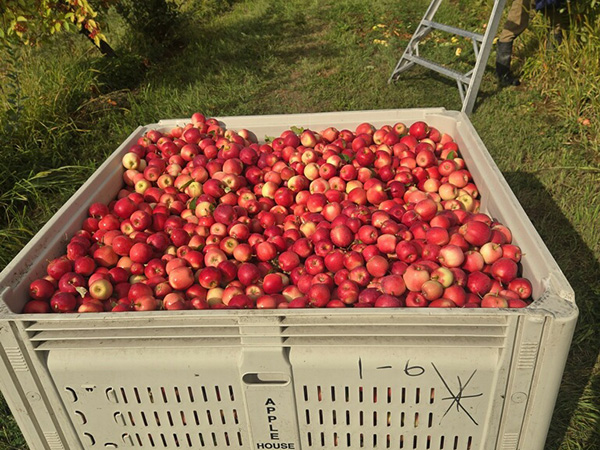
The FruitGuys is proud to partner with Chelan Fresh to support farmers like Bryan and deliver Lucy™ Rose and Lucy™ Glo apples to offices nationwide. Look for them in our Harvest, Season’s Best, and Staples fruit mixes during their fall season, especially in the Western US! To buy them in bulk for your office, request a bulk fruit delivery, and we’ll let you know if they’re available.