
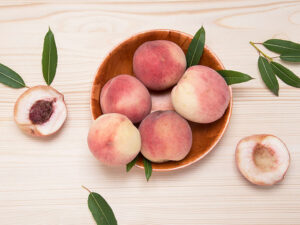
 A fashion edict of the 20th century was “only wear white between Easter and Labor Day.” Wearing white flapper dresses, knickerbockers, and shoes in summer has its practical purposes, and eating white fruit in summer has delicious ones. Have you noticed peaches and nectarines with white flesh this season? They have wonderfully cooling names like Arctic Sweet, Snow Giant, Ice Princess, and the distinguished and beguiling White Lady.
White peaches and nectarines are not newfangled or genetically modified. They’re grown around the world, but until 20 years ago were mostly a niche fruit popular with home growers. In America, they date back to the colonies. Especially popular in the 1800s was a white peach called the Belle of Georgia, which still exists today. It was so sweet, it was considered dessert quality. White peaches and nectarines were typically fragile and not suited for shipping. That was until Floyd Zaiger got wind of them. Zaiger, now in his mid-80s, is a world-renowned biologist and fruit geneticist who has created many important stone fruit varieties, improvements, and interspecific hybrids, like pluots and apriums.
In 1968, Zaiger made a visit to Europe, where the white peaches and nectarines fetched premium prices, due in part to the great care required in their handling and shipping. The time was ripe for Zaiger to rekindle white-fleshed varieties in the U.S. and develop fruit that could tolerate shipping. Big changes in American food culture often have to do with the development of new transportation and refrigeration technology.
The key description of white-fleshed stone fruit is that they are “sub-acid.” Now, sub-acid sounds like some underground band and not like something you should put in your mouth. But it’s simply the old acid/alkaline principle. The less (sub) acid, the sweeter the fruit. This can be a boon to people seeking less acid in their diet. White peaches and nectarines come in an array of complex flavors and aromas, tending toward the more delicate with sweet honey and vanilla overtones. Not necessarily snow white, their flesh is usually pearl with some rose at the pit—thereby inspiring the bevy of beautiful names.
Stone fruits are climacteric, which means they ripen after picking. Freshly picked, they will be firm. Keep stone fruits on the counter out of direct sunlight for a few days until they give softly to the touch and have a sweet aroma. After ripe, refrigerate fruit as necessary to prevent spoiling. Enjoy!
Heidi Lewis writes about farms, bees, and fruit from her home in Sonoma County, CA. She’s been with The FruitGuys since they were FruitKids.