East Coast GoodWorks Project Announcement

March 11th, 2010

owl boxOwl box and owl camera installation at Kauffman’s Fruit Farm!

Kauffman’s Fruit Farm
Bird-In-Hand, PA
March 18th
12:30pm

To learn more about this project, please contact bridget@fruitguys.com.

Share and Enjoy:

  • Digg
  • del.icio.us
  • Facebook
  • Google Bookmarks
  • LinkedIn
  • MySpace
  • Reddit
  • RSS
  • Twitter

GoodWorks in Action

March 11th, 2010

owlJoin us for our first Farm Steward Project of 2010 on the west coast at E&M Farm, growers of sweet and delicious nectarines and peaches, in beautiful Vernalis, CA. Come help us install six owl boxes while you learn about the owls in the area and the important role they play in rodent control.

If you can join us or have questions, email desiree@fruitguys.com.

E&M Farm
Mar 21st, 2010
12 noon – 3pm
Vernalis CA

Share and Enjoy:

  • Digg
  • del.icio.us
  • Facebook
  • Google Bookmarks
  • LinkedIn
  • MySpace
  • Reddit
  • RSS
  • Twitter

Field Trips

March 11th, 2010

Eugenie Clark

EAST
Wild Weekends – Looking at Animals
Mar 13 & 14
Philadelphia, PA

Environmental Film Festival
Mar 16-28
Washington, DC

NY Academy of Sciences – Shark Lady
Mar 29
New York, NY

CENTRAL
Family Farmed Expo
Mar 11-13
Chicago, IL

St. Paddy’s Day 5K Run & Leprechaun (Kid’s) Leap
Mar 14
Chicago, IL

Alder Planetarium DJ & Performance
Mar 18
Chicago, IL

WEST
World Water Day – LA
Mar 14
Los Angeles, CA

Frog Hollow Farm Blossom Festival
Mar 14
Brentwood, CA

Fort Bragg Whale Festival
Mar 20 & 21
Mendocino, CA

Share and Enjoy:

  • Digg
  • del.icio.us
  • Facebook
  • Google Bookmarks
  • LinkedIn
  • MySpace
  • Reddit
  • RSS
  • Twitter

The Skinny on Fatty Acids

March 11th, 2010

Just what are these omega-3s that the news and food product labels are full of? Omega 3s are essential fatty acids, which means our bodies need them but cannot make them so we have to get them from our diet. There are three different omega-3s: alpha-linolenic acid (ALA), eicosapentaenoic acid (EPA), and docosahexaenoic acid (DHA). ALA exists in leafy greens and plant-based oils (especially flaxseed, olive, soy, and canola), as well as walnuts and soybeans. EPA and DHA are found only in microscopic ocean algae and the fish that eat them, particularly fatty fish like salmon, mackerel, anchovies, halibut, herring, striped sea bass, and tuna (albacore).

omega 3 fatty acidsIf we only receive ALA from plant sources, our body can manufacture EPA and DHA from the ALA, but the process is not efficient, and can be further disrupted by the intake of another group of essential fatty acids called omega-6s, which are often present in large amounts in plant-based oils. In Western diets, people consume roughly 10 times more omega-6 fatty acids than omega-3 fatty acids. This is in part why the American Heart Association has recommended specific doses of EPA and DHA.

Extensive research has shown that the intake of EPA and DHA has profound health benefits. The most conclusive scientific evidence shows that DHA and EPA in the form of dietary fish or fish oil supplements lowers triglycerides, reduces the risk of death, heart attack, dangerous abnormal heart rhythms, and strokes in people with known cardiovascular disease, slows the buildup of atherosclerotic plaques (”hardening of the arteries”), and lowers blood pressure slightly.

Multiple studies show arthritis patients see improvements in morning stiffness and joint tenderness with the regular intake of fish oil supplements. Several large studies report that dietary omega-3 fatty acids or fish oil may reduce the risk of developing breast, colon, or prostate cancer. Preliminary studies indicate taking fish oil may reduce the growth of colon cancer cells. There is some evidence supporting the use of omega-3 fatty acids in treating depression, including childhood depression, schizophrenia, and bipolar disease. Many other benefits appear linked to EPA and DHA, and are being investigated.

So what are the drawbacks? In very large doses omega-3s may cause increased bleeding, but this is at levels high above the 3 grams/day considered safe. Some worry about eating fish itself or fish oil supplements because of the risk of contamination. The National Institute of Health (NIH) suggests oil supplements are usually safe because heavy metals selectively bind with protein in the fish flesh rather than accumulate in the oil. An independent test in 2006 of 44 fish oils on the US market found that all of the products passed safety standards for potential contaminants. For healthy individuals, NIH and the American Heart Association consider two servings of fatty fish a week safe and desirable.

So along with your fruits and veggies, consider increasing your omega-3 intake, and particularly EPA and DHA. Consult your doctor before taking omega-3s to treat any disease. And look for more on ratios of omega-3s to omega-6s in a future issue.

- Rebecca Taggart

Rebecca Taggart is a San Francisco yoga instructor.

Share and Enjoy:

  • Digg
  • del.icio.us
  • Facebook
  • Google Bookmarks
  • LinkedIn
  • MySpace
  • Reddit
  • RSS
  • Twitter

Get Fresh with OJ

March 10th, 2010

squeezed

Orange juice has been breaking American fasts since the Jazz Age; it’s as American as apple pie. Recently author Alissa Hamilton, a Food and Society Fellow with the Institute for Agriculture and Trade Policy, has been punching holes in our orange juice cartons. In her book Squeezed: What You Don’t Know about Orange Juice, Hamilton reveals that what we think is “fresh” orange juice in the refrigerated section of the grocery store is not so fresh at all.

For years now, not-so-fresh juice has been obfuscated by advertisements of slow motion juice pouring into gleaming glasses montaged over panoramas of shade-speckled groves. If you are buying juice in a carton, be sure to read the labels carefully. Here are some translations:

Juice – is the nectar from the tissues of a fruit or vegetable.

Juice Drink or Cocktail – contents can contain as little as 5% juice.

From Concentrate – juice that is boiled down to remove water for shipping or storage and then reconstituted.

Not from Concentrate – indicates juice has been pasteurized (heated) so it can be stored for up to 60 days.

A container announcing “Squeezed from Fresh Oranges” – (we would hope so) buyer beware of when they were squeezed and what happened to the juice afterwards.

The main problem with container juices is that after pasteurization or concentration, the flavor and nutrients are lost and need to be added back to make it palatable. Orange juice makers do this by creating “flavor packs.” According to Hamilton, the North American flavor packs are engineered with high concentrations of ethyl butyrate to provide a fresh orange juice smell. This is done in accordance with federal regulations as these flavors are “natural” and so require no special labeling. But Hamilton’s book is a sobering look at a drink we’ve become comfortable with and hardly think of as a “highly-processed” food.

Juice as a thirst quencher is a new addition to the human diet; mostly we’ve eaten fruit and drunken water to get what we need. According to The Linus Pauling Institute the daily recommended allowance of Vitamin C for an adult male is 90mg and 75mg for a female. That is easily achieved by eating one medium orange (70mg), one cup of strawberries (85mg), or a few little mandarin oranges (60mg) – plus the fiber is already included.

valencia orangeIf you love juice, try making your own from fresh fruit. There are many juicers available, from simple spoon, silent motorized models, and extractors, to sleek retro chrome presses that look cool on the counter. Valencia oranges are the best juice oranges, but all are good. To juice, the fruit should be room temperature; roll it on the counter (good job for a kid) first to soften it a bit. The juice of two oranges makes about one four-ounce glass of the genuine article. And the container is 100% compostable!

- Heidi Lewis

Share and Enjoy:

  • Digg
  • del.icio.us
  • Facebook
  • Google Bookmarks
  • LinkedIn
  • MySpace
  • Reddit
  • RSS
  • Twitter

Camp Garbology

March 8th, 2010

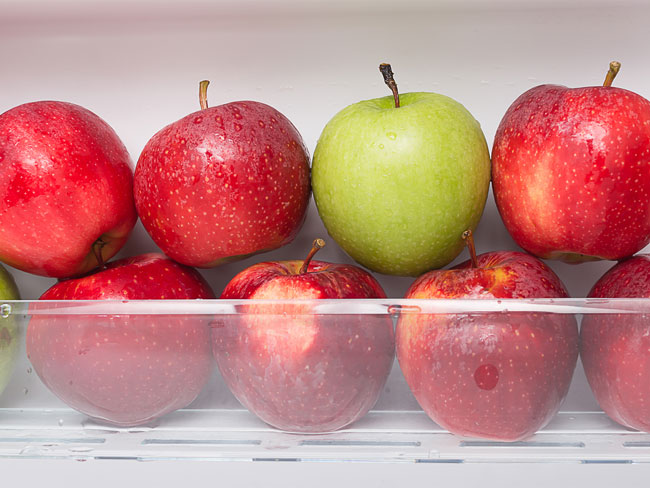
I’m a chaperone on my son’s 3-day, 5th grade outdoor education trip. We’re on a bus heading back from a camp in Santa Cruz. As my head bobs against the cool glass window I’m jarred out of a twilight sleep when the coach lurches and downshifts while descending Route 17. Kids in the front are singing in rounds, boys in the back are being separated for getting too rough. I’m just checking that I haven’t been drooling against the seat when a 5th grade girl in front of me leans around and stares at my flickering eyelids. “Wha-cha-do-in?” she chimes. Before I can answer in more than mumbles she notes: “You have really dark circles under your eyes.” She takes a bite of apple. She’s eaten it from the top – core and all. “I’m part of the hard-core-apple-club” she beams. “Red Tail showed me how.”

apples

Red Tail was the nature name for the camp counselor who led the garbology exercise. After each meal the kids scraped leftovers onto a scale and weighed them. Then they talked about how what remained affected the energy cycle. Sure I enjoyed Guinea Pig’s acoustic guitar version of the camp song “FBI: Fungus, Bacteria, Invertebrates” and wiggling with kids while singing the Santa Cruz Banana-Slug song to the tune of “Twist and Shout.” I also really appreciated the cabin rules my student group laid down such as “no using big words” and “absolutely no gambling,” but it was the garbology experiment that really caught my attention.

In three days our group of 60 kids went from producing 9 pounds of leftover food at the end of their meals to 3 pounds. A pretty good change just because they were conscious of it. Taking what you need and not more is a good lesson for kids (and adults). What I really liked about the experiment was that it taught conservation and in my book—whether you’re a business owner looking for efficiencies, a farmer hoping to reduce waste and increase yield, an individual looking to lessen your carbon or energy footprint, or a city looking to reduce waste—conservation is an important lifelong lesson that has only positive implications for everyone. No doubt that good habits start young but we all can create new habits at any age.

If you aren’t yet in the habit of checking out our weekly mixes – give it a try at www.fruitguys.com. Please read about fruits and veggies and find recipes in our growing Almanac section. On the west coast I really recommend picking up a Tahoe Gold mandarin from the box; out of the Midwest check out the last of Lehman’s Orchards farm-direct Empire and Jonagold apples, and on the east coast take a taste of the Macoun apples from New York.

Enjoy and be fruitful!
chris@fruitguys.com

Share and Enjoy:

  • Digg
  • del.icio.us
  • Facebook
  • Google Bookmarks
  • LinkedIn
  • MySpace
  • Reddit
  • RSS
  • Twitter

Chica Chica Boom!

March 8th, 2010

Bite from the bitter greens, the spring chicories, Radicchio and Dandelion greens, are here to help you to tone your tummy (from the inside) and put some zest in the rest of your body.

Chicory heads of Radicchio can appear loose leafed and freckled, or as compact maroon bundles. Radicchio varieties with beautiful Italian names like Pan de Zuccero, Bianco, or Castelfranco always get top billing in restaurants. Wolfgang Puck’s Radicchio and Chanterelle Pizza is served with the same haut cuisine treatment as a small plate of grilled Radicchio with an artful dash of balsamic reduction. On the other hand, the serrated Dandelion Greens are a stepchild that constantly reminds diners that it isn’t the same weed you just stepped on coming up the walk.

Dandelion in French means “Tooth of the Lion,” which describes its look, but also its bite. It is indeed the same as the bright yellow flowers that eternally bloom in lawns to delight children and dismay gardeners. But unlike the dandelion weed, this dandy has been carefully cultivated and organically grown by the farmers at Coke Farms (San Benito county). To enjoy the full roar of Dandelions sharp taste, rip them into bits, and add to a salad. If you like it tempered, blanch the greens by adding them chopped to salted boiling water for 10 minutes, remove and dunk in cold water. Then enjoy with olive oil, lemon, and salt, or try a sauté with garlic, onion, toasted pine nuts, and raisins.

A bit of bitter flavor is an important element to a balanced diet. In Chinese cuisine pungent, sweet, sour, salty, and bitter flavors are all partners. In Italian cuisine a bitter aperitif is customary. In German cuisine, bitters in the form of food, medicine, or schnapps are used as digestive. Herbalists worldwide recommend Dandelion greens as a wonderful liver tonic and general detoxifier in springtime. Enjoy this humble plant.

No creature is fully itself till it is, like the dandelion, opened in the bloom of pure relationship to the sun, the entire living cosmos. ~D.H. Lawrence

–Heidi Lewis

Share and Enjoy:

  • Digg
  • del.icio.us
  • Facebook
  • Google Bookmarks
  • LinkedIn
  • MySpace
  • Reddit
  • RSS
  • Twitter

Strawberry

March 5th, 2010

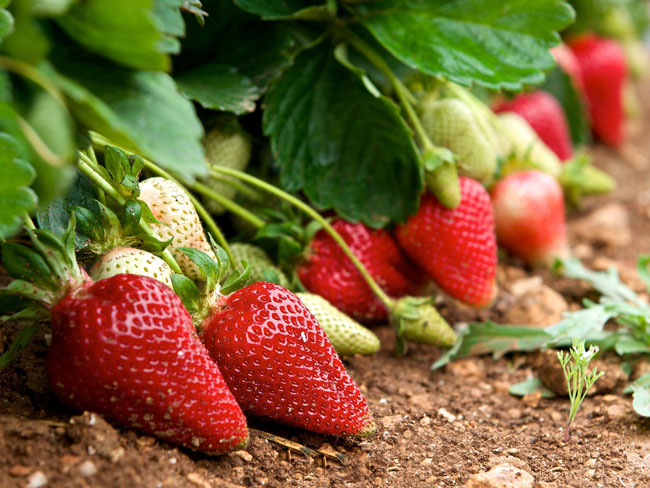
strawberries“Strawberry Fields For-ever.” Strawberries are a member of the rose family and like their cousin Rose evoke sentiment. They are after all heart-shaped. The strawberry is very delicate, it must be hand picked and rushed to a cooler. So delicate, a drop of rain could bruise the fruit.

Share and Enjoy:

  • Digg
  • del.icio.us
  • Facebook
  • Google Bookmarks
  • LinkedIn
  • MySpace
  • Reddit
  • RSS
  • Twitter

Dandelion

March 5th, 2010

dandelionDent de Lion – Tooth of the Lion – this serrated leaf is indeed the same as the lawn flower although organically cultivated for tender leaves. This bitter green has great nutritional and medicinal value.

Share and Enjoy:

  • Digg
  • del.icio.us
  • Facebook
  • Google Bookmarks
  • LinkedIn
  • MySpace
  • Reddit
  • RSS
  • Twitter

Cauliflower

March 5th, 2010

cauliflowerThe compact heads of cauliflower are called curds. When the small florets show themselves the farmer gathers their outer leaves together and ties them closed. Swaddling them “blanches” the curd so it grows up to be a white-headed cauliflower.

Share and Enjoy:

  • Digg
  • del.icio.us
  • Facebook
  • Google Bookmarks
  • LinkedIn
  • MySpace
  • Reddit
  • RSS
  • Twitter