
The egg shape, pebbly skin, and yellow-green flesh of the Hass avocado is iconic. That’s because 95% of the avocados Americans eat are Hasses! But there’s a whole world of avocado varieties out there to explore. Consider the grapefruit-sized Reed, the long-necked Pinkerton with its tiny seed, the Florida Brogden with its edible skin, and bite-sized GatorEggs™, just to name a few.
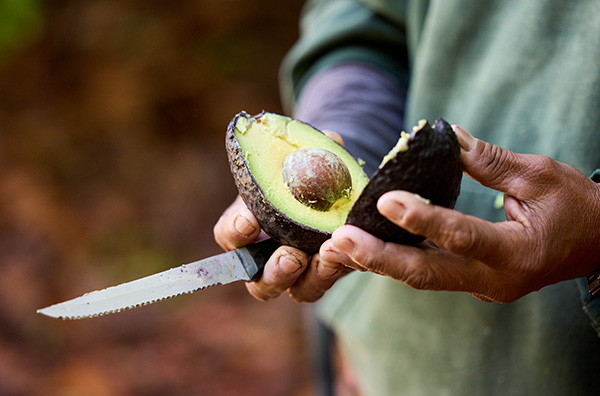
Not every avocado is a good fit for a FruitGuys fruit box, but we partner with several California farmers who grow not only Hass avocados, but rarer varieties, too.
Shanley Farms is a multigenerational family farm growing avocados, finger limes, passion fruits, and more in Morro Bay and Visalia, California. Farmers Megan Shanley Warren and Justin Warren produce two main avocado varieties: tiny, single-serving GatorEggs™ (more on those later) and special Hass avocados, which they sell under the name Morro Bay Avocados™.
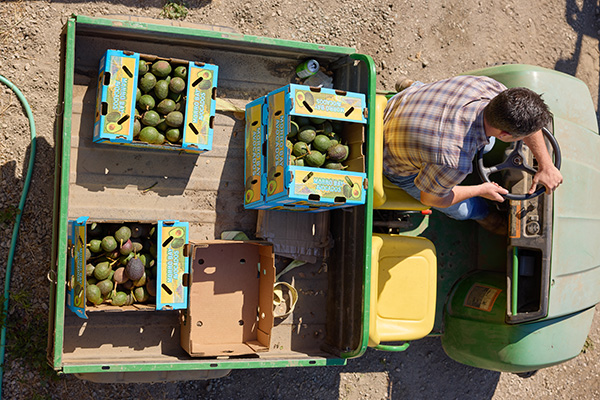
The farm takes an unusual approach to growing its Hasses. Most farmers harvest their California Hass avocados after twelve months of growth and market them in the spring and summer. But Megan and Justin leave theirs on the trees for up to eighteen months, letting them mature slowly in the cool, foggy weather and develop deeper flavors. They sell them from August–October.
“With these being on the tree for eighteen months, you’re guaranteed this very rich, oily flavor profile,” Megan explained.
Learn more about Shanley Farms’ Morro Bay Avocados™ in the video below.
Now that you’ve met an avocado grower, let’s jump into a few of The FruitGuys’ favorite varieties. Some we love to share with our customers, others just have fascinating stories!
When avocados are best to eat depends on the variety, the season, and the region where they’re grown. We included a ballpark for seasonality to help you hunt them all down. Still, you may spot a rogue Fuerte avocado in June or a Pinkerton in November. That’s part of the fun!
In season late fall–spring (from California)

The Bacon avocado doesn’t taste like bacon (we wish!), but it’s still delicious sliced into a sandwich or over a salad. It gets its name not from pork but from farmer James E. Bacon, who first grew it on his ranch in Buena Park, California, in 1928. Bacon avocados have smooth green skin and a mild flavor, and they’re a bit bigger than their Hass cousins.
In season in the summer (from Florida)
Have you ever seen an avocado that looks like an eggplant? If so, you might have spotted a Brogdon! This Florida variety is on the larger side with smooth-purple black skin and an oily, nutty flavor. Farmers love that it can tolerate cooler temperatures and has buttery yellow flesh perfect for guacamole. According to the LSU AgCenter, farmer Tom Brogdon grew the first one in Winter Haven, Florida.
In season late fall–spring (from California)
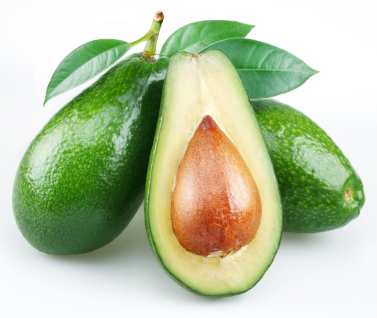
Before the Hass avocado hit the scene, the Fuerte was America’s favorite. Avocado explorer Carl Schmidt shipped a seedling back to California from Mexico in 1911. It earned the moniker fuerte or “strong” in Spanish after surviving a harsh California winter two years later. Avocado connoisseurs still love the Fuerte’s smooth green skin, pear shape, and creamy, buttery texture.
In season February–November (from California)
Tiny GatorEggs™ are about one-third the size of typical Hass avocados, perfect for a single serving! Jim Shanley of Shanley Farms patented the petite fruits in 2014. Slice one over a salad, spread it on toast, or try Justin Warren’s favorite avocado snack, which he shares in the video below.
In season spring–fall (from California)
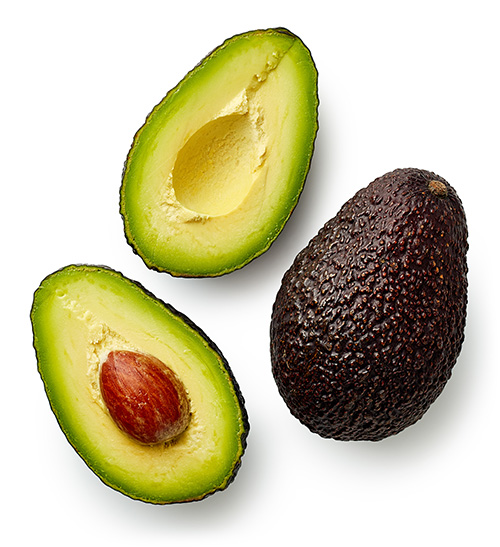
A whopping 95% of the avocados grown in California are the Hass variety—a California-bred fruit patented by avocado lover and mailman Rudolph Hass in 1935. It has bumpy green to purple-black skin, a custardy texture, and a complex, nutty taste.
In season late spring–fall (from California)
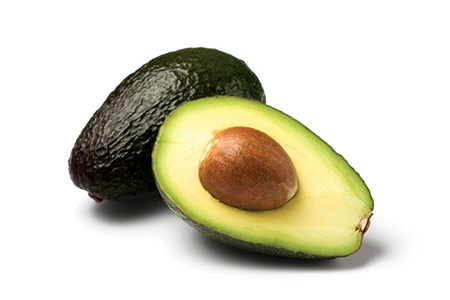
If you love Hass avocados, you’ll be a fan of their grandfruits! The Lamb Hass is a cross between a Hass descendant and the bigger, rounder Gwen variety. There are three ways to tell the Hass and Lamb Hass apart: The Lamb Hass is bigger, has more angular “shoulders” at the top of the fruit, and matures later in the year. It’s named for the Lamb family, who owned the farm where University of California researchers developed it in the 1990s. The FruitGuys sources creamy, nutty Lamb Hass avocados from Apricot Lane Farms in Moorpark, California.
In season early winter–spring (from California)
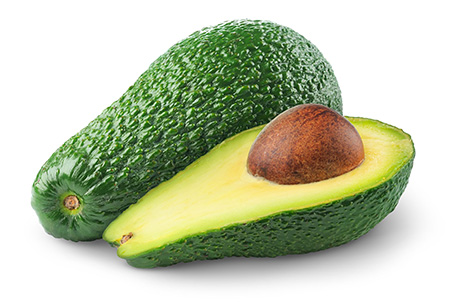
This avocado variety is creamy, nutty, oily, and easy to peel, with an elongated neck and a smaller-than-average seed. Pinkertons are thought to be a cross between Hass and Rincon avocados. The first one appeared on John Pinkerton Ranch in Saticoy, California, in 1959, and earned its patent in 1975.
In season summer–early fall (from California)
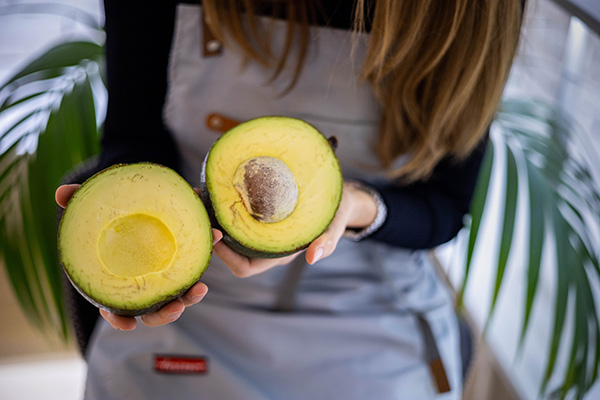
You won’t confuse the Reed for any other avocado varieties on our list: It’s as big as a grapefruit and just as round! Reeds have green skin and a rich, sweet flavor, and they hold their color well after you slice them. Like the Hass and Pinkerton varieties, they were born in California and named for their birthplace: the James S. Reed Ranch in Carlsbad.
Although it’s super-sized, the Reed isn’t the biggest avocado variety out there. This enormous variety originating in South Africa gets even bigger and weighs more than 2.5 pounds on average!
Look for the occasional Bacon, Fuerte, Hass, Lamb Hass, or Pinkerton avocado in our Harvest and Season’s Best mixes.
You might have heard that American avocados are only available in the spring and summer, but that’s not really true. You can enjoy domestic avocados almost year-round if you explore multiple avocado varieties and hunt for late-season growers like Shanley Farms. Look for California-grown avocados from April–October, and Florida-grown ones from June–January.
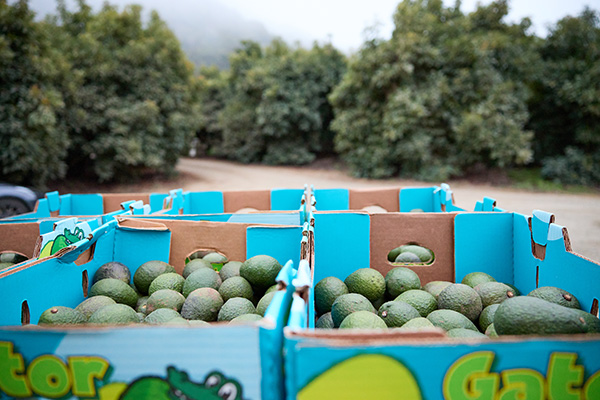
Here at The FruitGuys, we add the occasional avocado to our Harvest and Season’s Best boxes year-round as a special treat, prioritizing local sources but sometimes including imported avocados.
We recommend choosing local fruit when you can for freshness, flavor, and lower environmental impact. It’s also a good way to support local farmers who compete with foreign growers, especially during the fall and winter seasons.
“Supply super exceeds demand by a massive margin,” explained Marcus Hunt, who helps run the Morro Bay Avocado™ program at Shanley Farms. “Foreign countries continue to increase production, which starts to hit US markets in late August through the end of the year. This late import saturation has made profit margins disappear for the California growers.”
Depending on your location and budget, American-grown avocados might not be within reach—but if they are, your local growers (and your taste buds) will thank you! Try as many varieties as you can find to see which one you like best.
1. Are avocados a fruit?
Yes, avocados are fruits. Their skin and shape earned them the nickname “alligator pears”—although they’re technically berries.
2. Are avocados good for you?
Yep! They have healthy monounsaturated fat that make them easy to spread, and an abundance of Vitamin K, C, and B6, folate, and fiber. Check out this blog to learn more about their health benefits.
3. Where did avocados come from?
Avocados are native to south-central Mexico, where wild trees sprang up about 10,000 years ago. Today, you can find them growing in places like California, Florida, Hawaii, Australia, and South Africa.
4. How do avocados grow?
Avocados grow on trees! Each fruit dangles from its own stem. Avocado trees thrive in warm tropical or subtropical climates where they can get plenty of sunlight and water.

5. Are avocados sustainable?
How sustainable a fruit is depends on a lot of factors, including where it’s grown and the practices used on the farm. Learn more about the environmental impact of avocados and get tips for enjoying them more sustainably in this blog.
6. When are avocados ripe?
You can tell if an avocado is ripe by squeezing it gently. If it gives a little, it’s ready to eat! Avocados are typically sold hard, so you need to let them ripen at room temperature. Browse our handy guide for more fruit storage and ripening tips.