
A few weeks ago, my husband cut open one of the season’s very first peaches. It caved slightly to the touch and released a fragrant, floral mist when the knife bit into it. The scent alone made our mouths water! But when he tried to twist the flesh free of the pit, it refused to budge.
“Ah man,” he said, looking down at the fruit. “Does that mean it’s not ripe after all?”
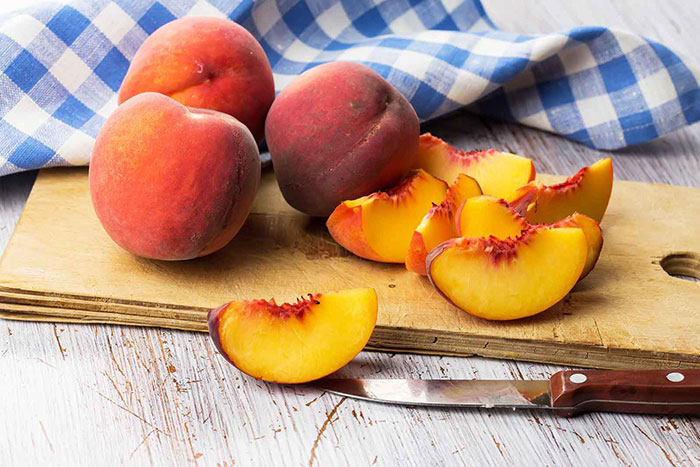
You might have faced this same peach dilemma during a summer snack break at your desk. If you have, I’m here to tell you the good news: As long as your peach gives a bit when you squeeze it and smells deliciously peachy, then it’s ready to eat—even if it has a stubborn pit! You’ve probably just stumbled across a “cling” peach.
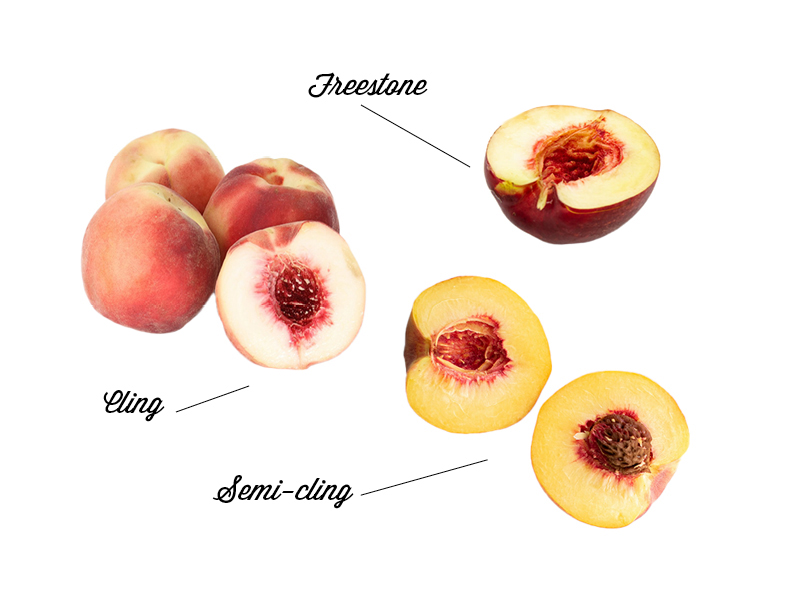
In the fruit world, we classify peaches by three different pit types: clingstone (aka cling), semi-cling, and freestone. Here’s how FruitGuys Co-founder Chris Mittelstaedt once explained the difference.
“Cling peaches are the type where the fruit is woven into the pit. Freestone varieties are those in which the pit is separated from the flesh. Semi-cling is an in-between fruit where the flesh is attached but not wholly embedded into the pit,” Chris said.
In other words, peaches are kind of like people. Some of them (freestone) are freewheeling and independent, while others (clingstone) have a little more trouble letting go. Those differences are perfectly natural. Here’s a closer look at each peach pit type and a few varieties you can look for in each category.
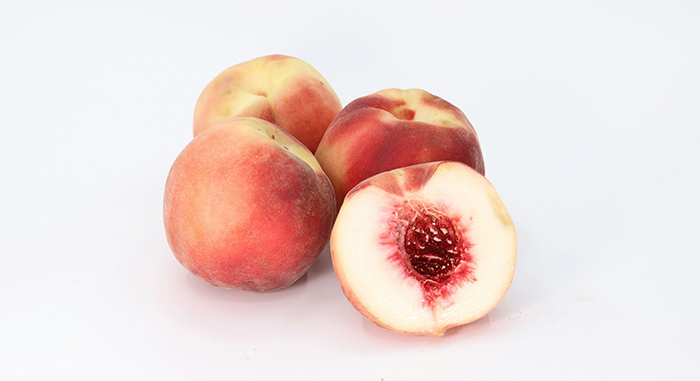
It’s very difficult to separate the flesh of a clingstone peach from its pit. Just like the name implies, they cling together. Cling peaches can be either yellow- or white-fleshed, and they’re often smaller, juicier, and sweeter than their freestone and semi-cling cousins.
Here at The FruitGuys, we’ve also found that early-season peaches—those ready for harvest in May or June rather than July, August, or September—tend to fall into the cling category. Those early peaches may not be as sweet as you’d expect from a typical cling since they haven’t had much time on the tree to develop sophisticated tastes and high sugar in their fruit.
Some of our favorite clingstone peach varieties are the Princess Time yellow peach and the Ivory Princess white peach.
Like pretty much all peaches, cling peaches are delicious eaten out of hand. But some people find prying the pit out or sucking it clean a little frustrating. Because of that hassle and their sweet flavor, cling peaches are a go-to for products like jams, jellies, and canned peaches.
Like pretty much all peaches, cling peaches are delicious eaten out of hand. But some people find prying out the pit or sucking it clean to be a little frustrating. Because of that hassle and their sweet flavor, cling peaches are a go-to for products like jams, jellies, and canned peaches.
If you want to try your hand at preserves, here’s a guide for making stone fruit jams and butters.
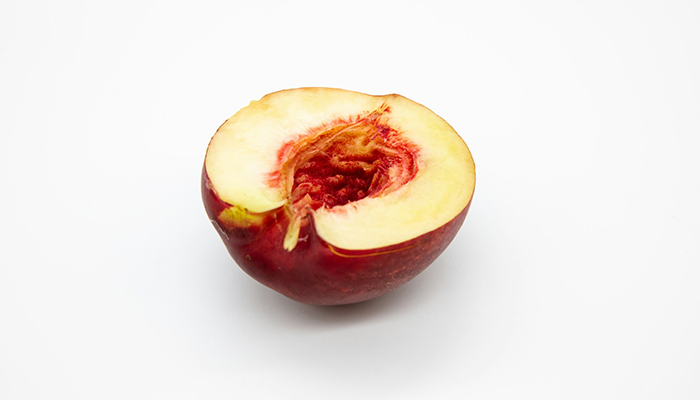
Freestone peaches are the easiest peaches to eat because when you cut them open their pits come right out. Often, they’re not attached to the fruit at all! That quirk makes both white and yellow freestones popular for snacking. Here at The FruitGuys, we include them in our Harvest and Season’s Best fruit delivery boxes every summer.
Typically, freestone peaches appear later in the season than cling peaches, so you can find them from June through September. We always look forward to varieties like the supersized O’Henry peach and the heavenly Sun Crest peach from Masumoto Family Farm.
Freestone peaches are also popular for baking because cooks get to skip the typical wrestling match with the peach pit. Try our recipe for Apricot-Peach Tart next time you have some freestones on hand, or mix up a few glasses of peach-infused white wine when you feel like getting creative in the kitchen.
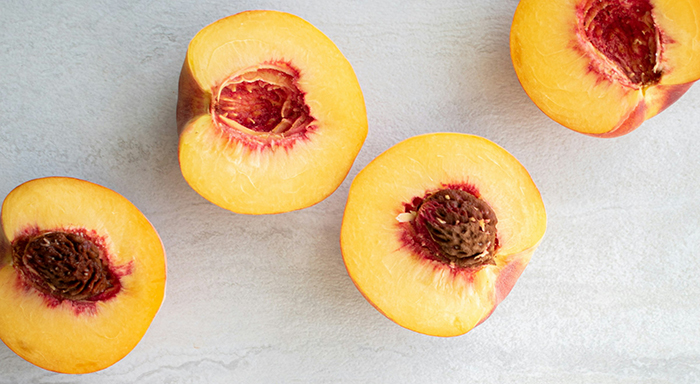
Semi-cling peaches are like the SUV crossovers of the peachverse: They’re a hybrid of cling and freestone peaches that give you the best of both worlds. Typically, semi-cling peaches are on the sweeter side (like clings) but with relatively easy-to-remove pits (like freestones). They can be either yellow- or white-fleshed, and you might also see them called semi-freestone, semi-free, or semi-clingstone peaches.
We don’t see semi-cling peach varieties as often as we do cling or freestone varieties, but here at The FruitGuys, we love to add them to our fruit boxes when we can. Some of our favorites are the Rich Lady and the June Prince.
You can eat semi-cling peaches out of hand, or use them in recipes like this one for Grilled Peaches with Amaretti Cookies or the one in the video below for Roasted White Peaches.
Freestone peaches are the easiest peaches to eat because when you cut them open, their pits come right out. Often, they’re not attached to the fruit at all! That quirk makes both white and yellow freestones popular for snacking. We include them in our Harvest and Season’s Best fruit delivery boxes every summer.
Typically, freestone peaches appear later in the season than cling peaches, so you can find them from June through September. We always look forward to varieties like the supersized O’Henry peach and the heavenly Sun Crest peach from Masumoto Family Farm.
Freestone peaches are also popular for baking because cooks get to skip the typical wrestling match with the peach pit. Try our recipe for Apricot-Peach Tart next time you have some freestones on hand, or mix up a few glasses of peach-infused white wine when you feel like getting creative in the kitchen.
| Feature | Cling Peaches | Semi-cling Peaches | Freestone Peaches |
| Pit Attachment | Flesh clings tightly to the pit, making it difficult to remove | Pit is partially attached, but fairly easy to remove | Pit separates easily from the flesh |
| Texture & Juiciness | Often very juicy and tender | Juicy with a balanced texture | Firm yet juicy, easy to slice |
| Flavor Profile | Very sweet, though early-season varieties may be tarter | Sweet; flavor varies by variety | Sweet; flavor varies by variety |
| Flesh Color | Yellow or white | Yellow or white | Yellow or white |
| Season | Usually early season (May–June) | Mid-season, depending on variety (June-August) | Mid-to-late season (June–September) |
| Best Uses | Fresh eating, jams, jellies, canned peaches | Fresh eating and cooking | Snacking, baking, desserts, and slicing |
| Ease of Preparation | Harder to remove pit | Moderately easy to remove pit | Very easy to remove pit |
To tell if a peach is clingstone or freestone, start by cutting it open. If the pit stays firmly attached to the flesh and takes effort to remove, you’re looking at a clingstone peach. If the pit pops out easily or even falls away from the fruit, it’s a freestone peach.
There’s no clear winner; it really depends on how you plan to enjoy your peaches!
Cling peaches get points for early availability and an extra-sweet flavor, which makes them great for preserves like jams, jellies, and canned peaches. Freestone peaches, on the other hand, are much easier to slice and pit, making them a favorite for snacking, baking, and cooking.
In the end, both types have their strengths. Cling peaches shine when you want deep sweetness, while freestones make snacking and cooking simple. Either way, a good peach is always worth the juice on your hands.
1. If the pit is stuck and won’t come out, does that mean the peach isn’t ripe?
Nope! Clingstone peaches have hard-to-remove pits, even when they’re ripe. Don’t worry about the stubborn pit—just cut it free and enjoy the sweet fruit. That’s what my husband and I ended up doing with our early-season peach, and it was perfectly juicy and lightly sweet.
2. How can I tell the difference between a clingstone, semi-cling, and freestone peach?
Cut the peach in half and check how easy it is to remove the pit. If it comes out easily, the peach is freestone. If it’s very difficult to remove and the fruit and pit seem woven together, it’s a clingstone. If the pit doesn’t fall right out but isn’t that hard to pull free, either, it’s semi-cling.
3. Which type of peach is best for baking based on pit type?
Some people prefer to bake with freestone or semi-cling peaches because the pits are easier to remove. However, cling peaches often have the sweetest flavor.
4. Which type of peach is best for snacking based on pit type?
Freestone peaches are the most popular snacking peaches because they’re easy to eat off the pit. However, pretty much all peaches are delicious and nutritious, regardless of their pit type. You can’t go wrong with any of them!
5. Are other stone fruits classified as clingstone, semi-cling, and freestone, or just peaches?
Other fruits with pits (aka stone fruits) like nectarines, apricots, and plums can also come in clingstone, freestone, or semi-cling varieties. Learn more about stone fruit (and get our Peach Crisp recipe) here.
Want more fun peach facts? We’ve got you covered—check out this blog.