
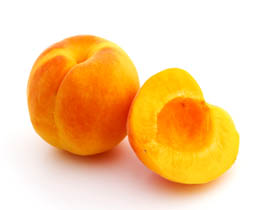
Apriums are a unique type of stone fruit, about 3/4 apricot and 1/4 plum. As our resident poet, Jeff, says:
“The difference between a fresh apricot and an aprium is the difference between silk and velvet. There’s just enough extra pucker in the aprium to make you feel like it would be worth wearing and fun enough to paint on.”
In other words, apriums have the sweet summer charm of apricots but with just enough of a twist to keep things interesting.
Apriums are an apricot-plum cross that leans toward apricot. In other words, they’re hybrid stone fruits (fruits with a pit or “stone”). They belong to the Rosaceae family, which includes peaches, nectarines, cherries, and, of course, apricots.
At first glance, apriums look a lot like apricots: round with a golden-orange skin, sometimes blushed with red. The skin is smooth but slightly fuzzy, and the flesh inside is typically firm, juicy, and rich in color. Most apriums are freestone—that means that when you bite into one, the pit comes out clean, with no clinging.
Like their cousin, the pluot (another plum-apricot cross that flips the ratio and is more plum than apricot), the aprium isn’t genetically modified. It’s the result of careful fruit breeding.
Hybridizing stone fruits isn’t new, but apriums are a more recent success. Floyd Zaiger, a fruit breeder from Modesto, California, created them in the late 1980s.
Zaiger spent decades developing fruit hybrids through natural cross-pollination methods. He took inspiration from earlier breeders like Luther Burbank, who first experimented with plumcots—early plum-apricot crosses that are half plum, half apricot. Zaiger refined those early ideas and went on to create a whole range of hybrid fruits, including apriums, pluots, peacotums, and more.
The process of developing hybrids like aprium isn’t quick. It takes at least 12 years and multiple generations of selective breeding to get the balance right in taste, appearance, and reliable growth, according to Zaiger’s daughter.
Today, apriums thrive in California’s Central Valley, where the climate suits them perfectly: warm, dry summers and mild winters. Many orchards now grow proprietary aprium varieties that ripen at different times during the season. Honey Gold, Cot-N-Candy, and Poppy Red are just a few of them!
Apriums are known for their intensely sweet flavor with very little acidity. They mostly taste like apricots, but there’s a subtle hint of plum and even a raspberry-like twist in there.
The flesh is dense and juicy. Perfectly ripe, they’re just firm enough to hold their shape for fresh eating or tossing in a salad. The skin adds to the experience: It’s a bit fuzzy, like an apricot, but thinner and more delicate.
It’s best to let your apriums ripen at room temperature. You should eat your apriums when they’re soft to the touch, but don’t let them get too soft or mushy, as they’ll quickly move past their prime. If you need to store them, pop them in the fridge after they ripen, and they’ll keep for a few more days.
You can find apriums in grocery stores and at farmers markets from late spring through early summer or get them delivered right to your office or home in The FruitGuys’ fruit mixes! The variety of fruits in each mix changes weekly, but you can often find apriums and apricots tucked inside during their short and sweet season. We like to source them from local California growers like Family Tree Farms.