
Have you ever picked up a round orange-colored fruit and wondered, “Is this an orange or a mandarin? Or wait … maybe a tangerine? Or a tangelo?” Winter brings an avalanche of citrus, but a lot of these fruits look so alike that it can be tricky to tell what you’re eating. That’s where this handy guide to different citrus fruits comes in!
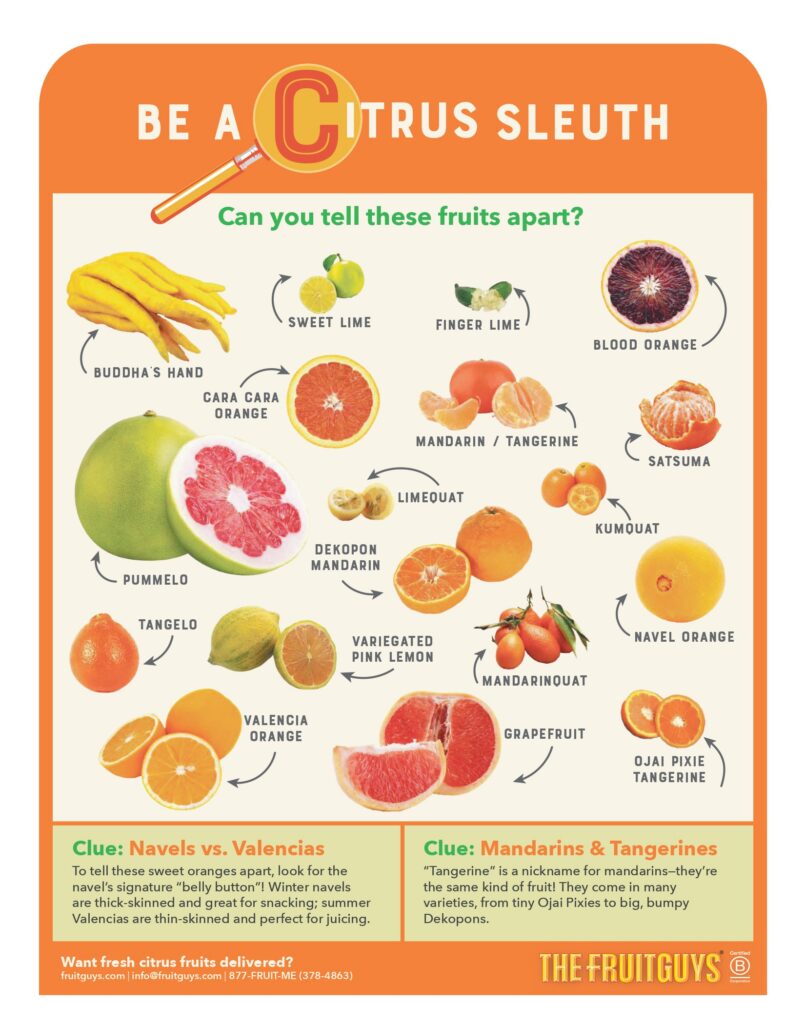
When you know what to look for, it’s easy to tell different types of citrus apart. Here are a few tips for identifying the most common citrus varieties you might see at the grocery store or in The FruitGuys’ seasonal fruit mixes.
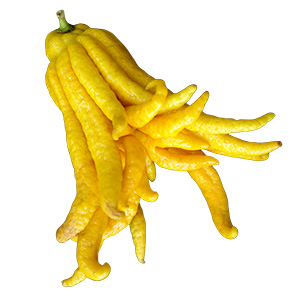
Buddha’s Hand is perhaps the easiest citrus fruit to tell apart from the rest. It’s a type of citron (one of the five parents of all citrus fruits) and looks a bit like a bright yellow hand with many reaching fingers. Buddha’s Hand is unique among citrus because it has no edible flesh. Instead, you should eat the lemony, floral zest! Try it in drinks, in salad dressings, or grated over pasta.
Meet a Buddha’s Hand Farmer: Rising C Ranches (aka Fruition Sales/Ripe to You) grows Buddha’s Hands and other exotic fruits for The FruitGuys in Orosi, California.
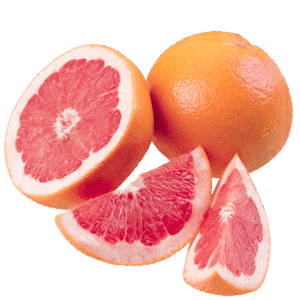
Grapefruits are a large, sweet-tart citrus fruit descended from sweet oranges and pummelos. They’re usually smaller than pummelos but bigger than oranges, about the size of a softball. Their color differs from one variety to another, but they’re often yellow or orange on the outside with pale yellow to reddish-pink flesh. Grapefruits are sweet-tart and a little bitter and have less pith (the squishy white stuff between the flesh and the peel) than their pummelo relatives. To eat one, peel it like an orange or slice it in half and scoop out the flesh with a spoon.
Grapefruit Recipe: Grapefruit adds a refreshing bite to salads, like this winter Chickpea Salad with Grapefruit and Fennel.
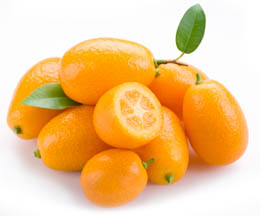
Kumquats are small, bright orange citrus fruits about the size of grapes. They’re one of the oldest citrus varieties around, and they’re also the original sweet-tarts! There’s no need to peel them—simply pop one in your mouth and bite into it to enjoy the sweet skin and sour juice. You can tell kumquats and mandarinquats (a kumquat descendant) apart by their size. Kumquats are typically smaller and more oval, while mandarinquats are slightly larger and teardrop-shaped.
Kumquat Recipe: Kumquats are great for snacking, but they’re also tasty sliced and muddled into drinks like this Kumquat Mint Mocktail.
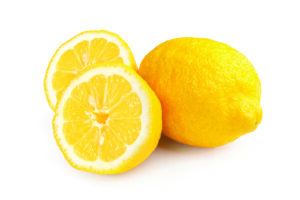
Lemons are tart citrus fruits descended from citrons and sour oranges. Like traditional citrons, they have bright yellow skin and juicy yellow flesh inside. They’re often 2–3 inches long, can be round or oval, and usually have a nib that bumps out at one end. Persian limes (the most common variety in the US) are descended from lemons, but you can tell them apart by their color (limes are green, lemons are yellow) and size, as lemons are typically bigger and sweeter.
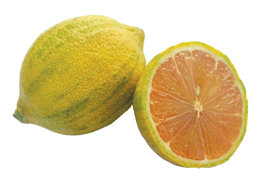
Lemon Recipes: Though most people don’t eat the flesh of lemon fruit straight, the juice and zest can add a tart punch to everything from drinks and desserts to side dishes. Try making Lemon-Lavender Soda Bread, Spring Veggies with Lemony-Dill Sauce, or Fresh Lemonade. To make naturally pink lemonade, use variegated pink lemons.
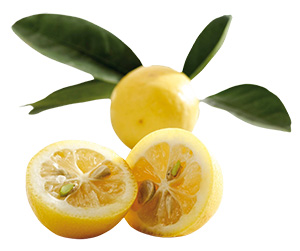
As you might have guessed, limequats are a hybrid fruit that’s part kumquat and part Mexican lime (aka Key lime). They have sweet edible skin (like kumquats); tart, juicy flesh; and a few edible seeds. If you love sour and tangy fruit, pop a limequat into your mouth and eat it whole! You can tell limequats, mandarinquats, and kumquats apart by their color. Kumquats and mandarinquats are orange, while limequats are yellow or yellow-green.
Limequat Snack Tips: Snack on limequats whole for a sour candy-like treat. You can also slice them onto salads or squeeze their juice into water, into salad dressing, or over a yogurt bowl.
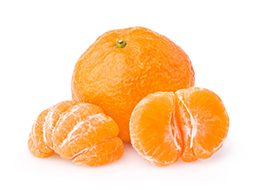
Mandarins are one of the five original citrus fruits. They’re a fan-favorite for office snacking because they’re smaller and sweeter than oranges. Many varieties are also seedless and super easy to peel. It might surprise you that mandarins and tangerines aren’t different citrus fruits—they’re the same! Farmers and fruit sellers often use the names interchangeably, although “tangerine” can also refer to mandarin varieties with red-orange skin and a few other common traits.
More Mandarin Varieties: On top of the mandarins named above, try these for sweet snacking: Gold Nugget, Tahoe Gold, Kishu, Daisy, Page, and Murcott/Tango.
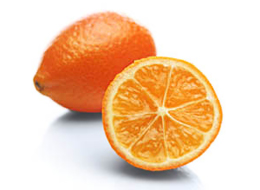
The mandarinquat is a rare citrus fruit that’s part mandarin and part kumquat. They’re usually egg-shaped, bright orange, and bigger than their kumquat parents (although still smaller than mandarins and oranges). They also have a sweeter taste, crunchier skin, and extra seeds. You can eat them whole, too, just like kumquats and limequats!
Mandarinquat Recipe: Try replacing kumquats with mandarinquats in this recipe for Kumquat Chutney.
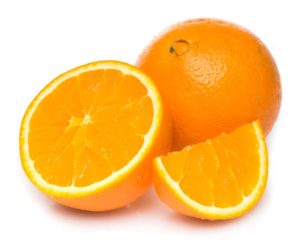
Oranges, also known as sweet oranges, are probably your first thought when you hear the word “citrus.” They’re round, juicy, and sweet and come in multiple delicious varieties. You can usually spot them by their spherical shape and medium size. They’re larger than petite kumquats and mandarins but smaller than grapefruits and pummelos.
Navels vs. Valencias: Learn more about the two most popular orange varieties and how to tell them apart by appearance, flavor, and more in our “Navels vs. Valencias” blog.
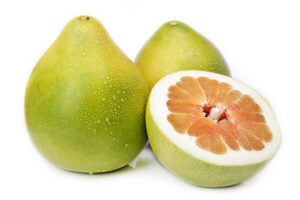
Like kumquats and mandarins, pummelos (aka pomelos) are one of the granddaddies of all citrus fruits. They’re most often confused with their descendant the grapefruit, but you can spot them by their teardrop shape, extra-large size, and yellow-green skin. If you cut open a pummelo, you’ll also notice that it has a thick layer of white pith surrounding the relatively small, mildly sweet fruit inside.
Pummelo vs. Grapefruit: Take a closer look at the differences between these two big citrus fruits in our “Pomelo vs. Grapefruit: What’s the Difference?” blog.
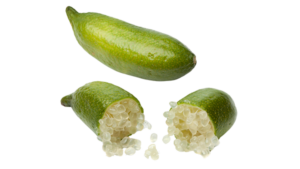
The finger lime is a very different type of citrus. In fact, since it hails from Australia, some scientists even argue that it’s not a citrus at all! You can recognize a finger lime by its unique finger shape and the surprise inside. Crack one open to reveal tart, poppable “pearls” of fruit that are sometimes called citrus caviar. They’re delicious on fruit salads, tacos, and sushi or squeezed straight into your mouth.
Meet a Finger Lime Farmer: In this profile, California farmer Megan Shanley Warren of Shanley Farms walks you through how to eat a finger lime, its health benefits, and more.
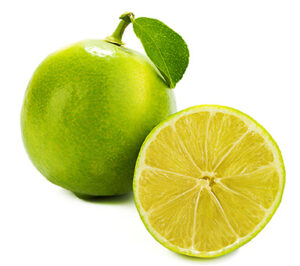
The sweet lime’s parentage is up for debate, but we can all agree that it looks like a lemon and lime came together. It’s the shape and size of a lemon, and its peel starts green and ripens to yellow-green or full yellow. You can tell it apart from lemons and limes by the flavor: It’s sweet and lower in acid, without that classic lime bite. To eat a sweet lime, peel it and eat it like an orange, or add the juice to drinks or recipes.
Sweet Lime Snack Tips: Squeeze sweet lime juice over salad, mix it into yogurt, or blend it with ice for a refreshing granita.

Tangelos are part zesty grapefruit and part sweet mandarin/tangerine, with the best qualities of both parents because they’re easy to peel, juicy, and delicious. You can usually spot them by the distinctive bump at the stem (similar to what you’d find on a Dekopon mandarin). If you’re not sure whether you have a tangelo or mandarin in hand, check the size—tangelos are usually bigger—then try a taste test. If it has acidic zip, it’s probably a tangelo!
Meet the Minneola: The Minneola tangelo (aka the Honeybell) is the bell of the tangelo ball, and you can learn more about it in our “Minneola Tangelo” blog.
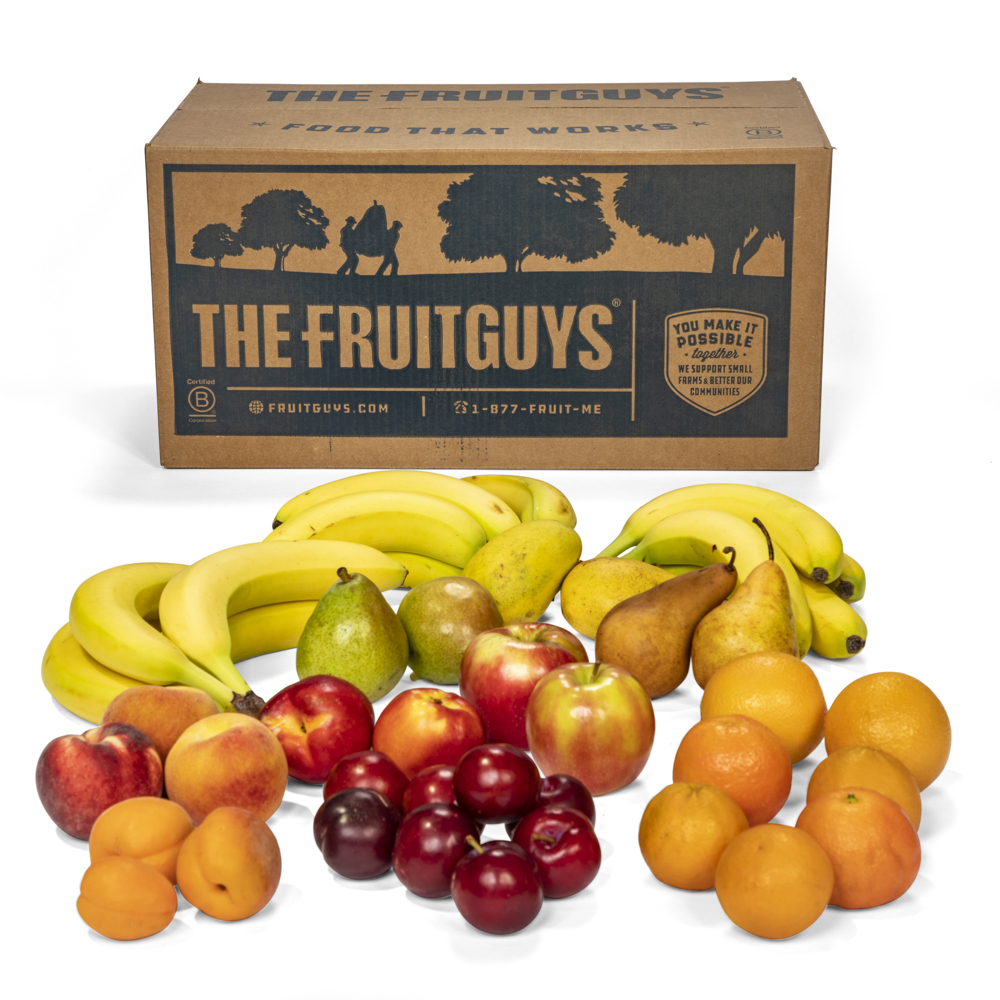
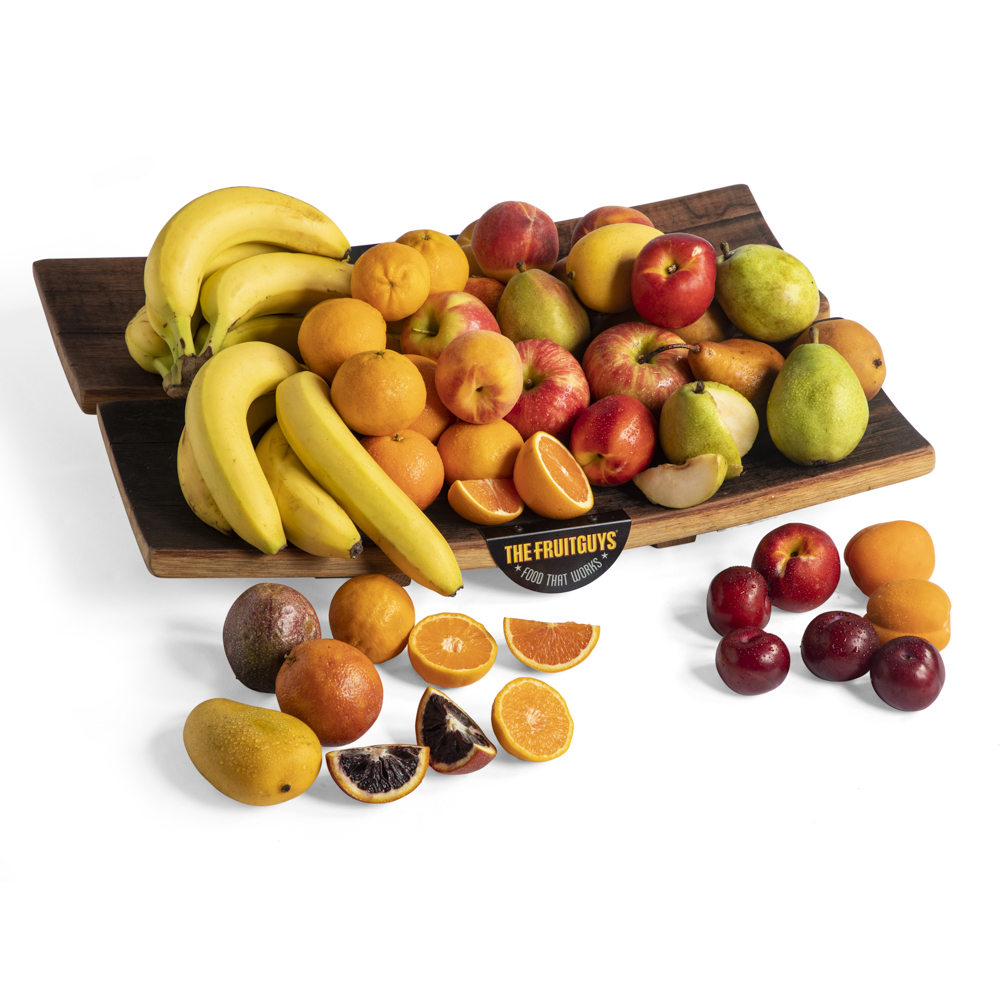
If you want to try as many of these different citrus fruits as you can—and test your citrus sleuth skills—consider regular deliveries of fresh fruit from The FruitGuys. Our Harvest Mix packs in a wide variety of seasonal and unique bites and changes every week, so you always have something fresh to taste. It’s great for home delivery or as a wellness benefit in the office. In the winter and early spring, citrus fruits like blood oranges, Cara Caras, Minneola tangelos, Satsuma mandarins, and more abound in the Harvest Mix. Try to taste them all!